Podcast Episode 12: You are worth more than rubies

Pip: Pollywog’s Place Blog is the kind of corner of the internet where someone sits down, opens their heart completely, and just writes — no hedging, no brand strategy, just genuine belief on the page.

Mara: Today we’re spending time with a post from Susie at Pollywog’s Place Blog that sits squarely in the territory of faith, self-worth, and what it means to wait well. Let’s start with the letter she wrote to her daughters.

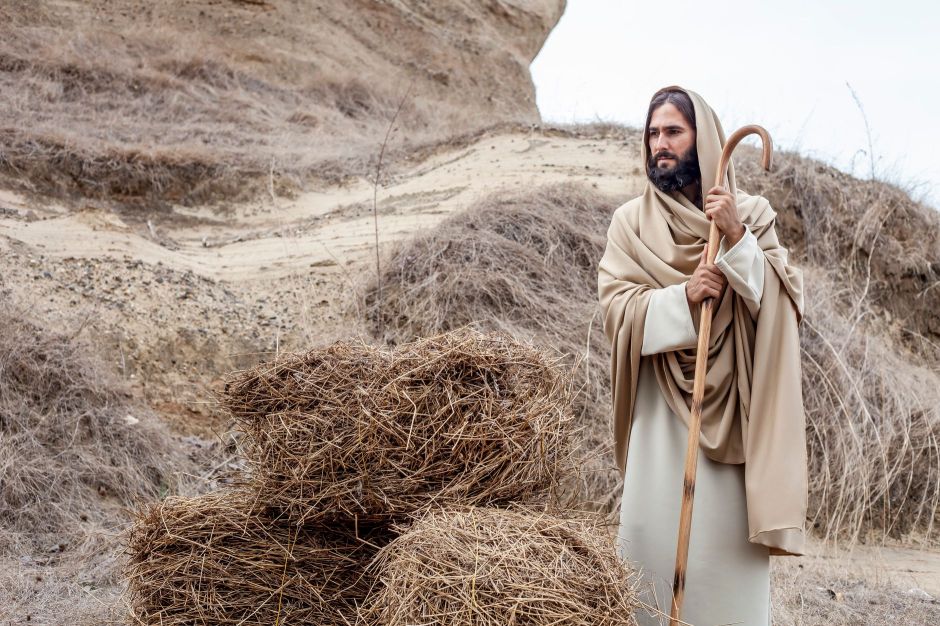
You Are Worth More Than Rubies

Pip: This post opens with a Proverbs verse and then does something quietly ambitious — it tries to hand a daughter the framework she’ll need before she ever needs it, while she still might actually listen.

Mara: The setup is a mother writing to her daughters, but she’s clear from the start that it reaches further than her own household. She writes, “I am writing this for my beautiful daughters but it really could be directed to all of the women out there, young and old.”

Pip: So the frame isn’t private advice — it’s a public letter. Which changes how you read everything that follows, because she’s not just parenting, she’s witnessing.

Mara: And the core argument she builds is about standards — not as a gatekeeping mechanism, but as an act of faith. The logic goes: God has a specific person in mind for you, so settling isn’t just settling for less, it’s stepping out of the path He’s already laid.

Pip: There’s a line in there that cuts through the usual advice-column noise pretty cleanly.

Mara: She writes, “Don’t let these guys tell you that your standards are too high. Your standards are your standards and they have no right to judge them. This is just a sign that they are not the one for you.” That’s not a soft reassurance — it’s a diagnostic.

Pip: Right — she’s reframing rejection itself as information rather than verdict. The guy who pushes back on your standards is the guy who just told you something useful about himself.

Mara: She also addresses the impulse to fix someone — to stay because you believe you can change them. Her answer is direct: that kind of change, she says, can only come from above.

Pip: Patient, specific, and she closes with a prayer — which given everything she’s built up to, lands less like a formality and more like the whole point.

Mara: The patience thread runs all the way through. Waiting isn’t passive here; it’s active trust — developing your relationship with God so that when the timing is right, you’re ready too.


Pip: Faith as a framework for self-worth — not as a ceiling but as a floor you don’t fall through.

Mara: That’s the thread worth carrying forward. More from Pollywog’s Place next time.

You Are Worth More Than Rubies

Podcast Episode 06: Growing Children of GOD: Integrating FAITH Into Our Homeschool

Pip: Welcome back to Pollywog’s Place Blog, where the curriculum planning is done, the Bible verses are cited by chapter and verse, and the school year has a theme for every single month.

Mara: Susie at Pollywog’s Place Blog has mapped out a full year of faith-integrated homeschooling, and today we’re walking through how she’s woven biblical principles into every subject — from financial literacy in January all the way through to December math.

Pip: Let’s start with the plan itself — and it is a plan.

Growing Children of GOD: Weaving Faith Into Every Subject

Mara: The core question here is how you make faith feel like a natural part of learning rather than a separate subject bolted on — and the answer is a month-by-month structure that aligns each academic subject with what the family is already doing that time of year.

Pip: The post puts it directly: “It’s not a race, but there is a big goal ahead… our children’s futures are in our hands, and we must hand them over to GOD and ask HIM to guide us in the way we should go and show us what we should be teaching them.”

Mara: That framing matters because it sets the tone for everything that follows. This isn’t a rigid syllabus — it’s a set of habits the family is trying to build until they become, as the post says, “like second nature.”

Pip: And the structure does a lot of the heavy lifting there. January is financial literacy because the family is already organizing bills and budgets — so biblical stewardship, tithing, and verses on contentment get folded into something they’re doing anyway. The lesson arrives on the back of real life.

Mara: February shifts to fine arts, tied to handmade gifts and sacred art. The post suggests studying hymns, exploring art inspired by Bible stories, and connecting creative gifts to First Peter four-ten — using whatever talent you have to serve others.

Pip: March brings health and physical education, which lands right as things warm up in Florida — and Lent begins. So the body-as-temple conversation and sportsmanship virtues get their moment alongside spring cleaning.

Mara: April opens into creation science and nature journaling, with Earth Day providing a natural hook for environmental stewardship. May uses American Sign Language as the foreign language focus, connecting it to Pentecost and the idea that learning another language is a way to share faith across cultures.

Pip: ASL is genuinely practical — the post notes you can communicate with a family member across a noisy room without making a scene, which is a skill with immediate real-world value.

Mara: June through December keeps the same logic running. Community service in June, home economics and hospitality in July, responsible digital citizenship in August, homesteading and harvest preservation in September. October is language arts built around faith-based literature and Scripture copywork, November is history framed as what the post calls a “Redemptive Narrative,” and December wraps with mathematics — doubling and tripling holiday recipes counts as real math practice.

Pip: Fibonacci sequence as evidence of God’s design in December is the kind of curriculum move that makes a kid actually look at a pinecone differently.

Mara: The post closes by inviting readers to suggest additions — the outline is offered as a starting point, not a finished document, and the family expects to rotate and adjust the topics across future years.

Pip: A living curriculum, which is probably the only kind that survives contact with actual children.


Mara: The throughline across all of this is that faith doesn’t need its own separate hour — it fits inside the subjects that are already there.

Pip: Next time, we’ll see what else is growing at Pollywog’s Place.

You can read the post HERE:

Growing Children of GOD: Integrating FAITH Into Our Homeschool

Podcast Episode 11: Would The Real Boaz Please Stand Up?

Pip: Welcome back to Pollywog’s Place, where the questions are personal, the faith is real, and the waiting rooms of the heart are fully furnished.

Mara: Susie at Pollywog’s Place Blog has been sitting with the book of Ruth — and what comes out of that is a meditation on faith, longing, and the kind of character that actually holds up over time. Let’s start with what she’s really asking when she asks where her Boaz is.

Would The Real Boaz Please Stand Up?

Pip: The book of Ruth is a love story, but this post uses it as a lens for something more immediate — what does it actually look like to wait for a partner with integrity, and what does that waiting cost you in the meantime?

Mara: The post grounds that question in something concrete. Writing about the man she hopes to find, she says: “He would want to guard my heart and wipe my tears, not be the cause for them.”

Pip: That line earns its weight. It comes after a pattern of meeting men who seemed to carry those qualities and then didn’t — the false front drops, trust gets broken, and old wounds resurface. The standard isn’t wealth or status; it’s whether a person’s character holds when no one’s performing.

Mara: Right, and she’s explicit that she’s not asking about occupation or income. The traits she names — integrity, genuine kindness, giving without expectation, the willingness to lead — map directly onto how Boaz behaves in the text. He notices Ruth, protects her, and acts without being asked.

Pip: What makes the post land, though, is that she turns the same scrutiny on herself. The prayer list isn’t just for him — it’s equally long for her own becoming.

Mara: She puts it plainly: “I also try to pray that God will shape me and mold me into the person that my Boaz will need me to be.” That symmetry matters. She’s not waiting passively; she’s actively trying to become someone ready for what she’s asking for.

Pip: And she’s not searching, either — not in the conventional sense. The posture is trust that placement is God’s work, not hers. Which takes a particular kind of patience when rejection has already done its damage.

Mara: She names that directly — feelings of rejection creeping in from past hurts, the difficulty of trusting after someone has used her vulnerabilities against her. The faith isn’t naive; it’s chosen in full view of the cost.

Pip: Waiting with eyes open. That’s the harder version.

Mara: And the one she’s committed to.


Pip: Faith as an active posture, not a passive one — that’s the thread running through all of this.

Mara: It’s a distinction worth sitting with. More from Pollywog’s Place next time.

I’ve already found my ‘Boaz’, but I hope this encourages you, if you are still looking!

Would the real Boaz please stand up?

Podcast Episode 10: The Two Frogs Tale

Pip: Welcome back to Pollywog’s Place, where the lessons are ancient, the stakes are surprisingly high, and the protagonists are occasionally amphibians.

Mara: Susie at Pollywog’s Place Blog has a piece up that uses a classic fable to dig into something genuinely consequential — the power words have over the people around us. Let’s start with the tale itself and what it’s actually asking us to do.

The Two Frogs Tale

Pip: The setup here is a question about stakes — specifically, whether the words other people say to us can be the difference between making it out of a hole and not making it out at all.

Mara: The post frames it directly: “We need to see just how powerful our tongue and our words can be. If we speak an encouraging word to others it can possibly be the motivation that they need and help them to get through a difficult time.”

Pip: And the flip side is just as stark. The post doesn’t soften it — wrong words can send someone into a downward spiral. That’s not a metaphor being stretched; the fable literalizes it as a matter of survival.

Mara: The fable itself is the engine of the whole piece. Two frogs fall into a deep pit. The crowd tells them they’re as good as dead. One frog believes it and gives up. The other, who is deaf, assumes the crowd is cheering him on — and he jumps harder and gets out.

Pip: So the frog who survives does so precisely because he couldn’t hear the discouragement. Which is either a beautiful lesson or a fairly grim commentary on what the rest of us are subjected to.

Mara: The post draws that out carefully. It connects the fable to a broader idea about being intentional — making a conscious effort to use words that encourage rather than deflate, and asking for help staying quiet when you genuinely can’t manage that.

Pip: There’s something honest about that last part. Not “always say something kind,” but “if you can’t, maybe say nothing.”

Mara: Right — the post names tongue-control as genuinely difficult, almost impossible at times. It’s not presented as easy virtue, which gives the moral some weight.

Pip: The fable earns its place here because it makes the abstract concrete. Words as life-or-death isn’t hyperbole when you watch one frog die and one walk away.


Mara: The throughline is simple but not small — what we say shapes what people believe is possible for them.

Pip: Worth sitting with. More from Pollywog’s Place next time.

The Two Frogs Tale

Podcast Episode 09: Longing For Simpler Times

Pip: Welcome back to Pollywog’s Place, where the weekend itinerary includes battle reenactments, Pioneer Day festivals, and a lamb cake pan acquired off eBay — which is honestly a solid Saturday.

Mara: Susie at Pollywog’s Place Blog has been writing about what it feels like to step away from modern stress — through history, through simpler living, and through the question of whether a happier past is something you visit or something you carry. Let’s start with nostalgia and what it actually does for us.

Escaping Into Simpler Times

Pip: There’s a real tension at the center of these posts — the idea that the past isn’t just interesting, it’s actively useful as relief. When daily life piles up, stepping into a different century, even briefly, seems to do something.

Mara: The Camp Milton post frames the whole day that way. After describing a genuinely packed visit to a battle reenactment, a village general store, a period schoolroom, and a Civil War-era doctor’s tent, the post lands here: “Today also has me yearning for some of the old ways from a simpler time but I do like some of our modern conveniences, like grocery pickups, that we have today. Can I find a happy medium? Maybe one day.”

Pip: That’s the honest version of nostalgia — not a fantasy of going back, but a real wish to borrow something from then and bring it forward. The day worked because it was immersive: beef jerky rations for breakfast, wooden tops from the school tent, kids quizzing a period doctor about amputations.

Mara: And the homeschool angle sharpens that — the visit tied directly into ongoing Little House on the Prairie lessons, so the past wasn’t decorative. It was the curriculum. The kids weren’t just watching history; they were asking it questions.

Pip: Which makes the second post, Yearning For Simpler Times, feel like the quieter, harder version of the same impulse. No festival, no costumes — just a dream about a smaller, run-down house that somehow felt like relief.

Mara: That post is more inward. It’s about stress that doesn’t resolve when you get home — interpersonal friction, boundaries that haven’t been set, the feeling that having more hasn’t made things simpler. The line that anchors it is direct: “Life has gotten so complicated and I yearn for those simpler times.”

Pip: Both posts end in roughly the same place — not escape, exactly, but motivation. The festival day refills the tank for the week ahead. The harder post ends with a list, a plan, a decision to act on what’s actually controllable.

Mara: The nostalgia is real, but it’s doing work. It’s not avoidance — it’s a reset.

Pip: The past as a charging station. That tracks.


Mara: What stays with me is that both posts treat simpler times as a direction, not a destination — something to orient toward, not actually return to.

Pip: The lamb cake pan helps. Some traditions are worth retrieving. More on what gets carried forward next time.

Yearning for simpler times

Escaping Today’s Stress By Taking A Step Back In Time