
Hello friends,
There are seasons when God calls us to keep moving forward, faithfully tending the work He has placed before us. There are also seasons when He calls us to become still—to examine our hearts, mend what has been broken, and return to Him.
Lately God has been calling me to share what I’ve been learning with others. I won’t pretend to be any kind of expert so I do encourage you to do your own research whenever you may have questions or doubts about things. My biggest reason for sharing is that observing the feasts have allowed me to become close to GOD, delve deeper in HIS WORD, and they allow me to remember HIS PROMISES.
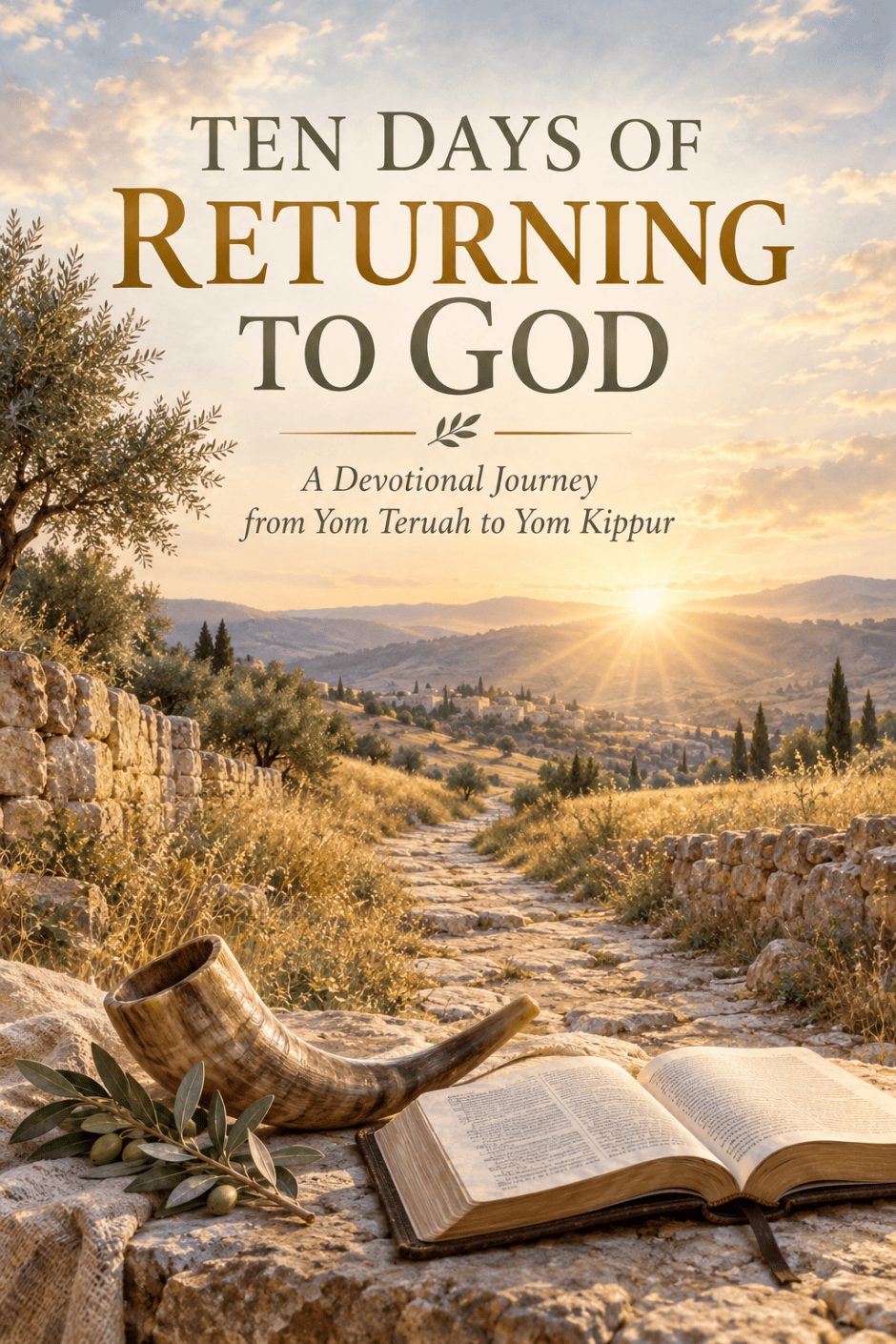
The period from Yom Teruah to Yom Kippur offers a beautiful opportunity for this kind of quiet reflection. This devotional can be done by anyone at any time though!
Yom Teruah, sometimes called the Feast of Trumpets, begins with the biblical image of a trumpet blast. In Scripture, the sound of a trumpet could announce a gathering, warn of danger, prepare people for action, or call God’s people to attention. It was a sound that could not easily be ignored.
Yom Kippur, the Day of Atonement, comes ten days later. It is a solemn day associated with repentance, cleansing, and restoration before God.
Together, these days form a meaningful journey: awakening, examining, returning, confessing, forgiving, and resting in God’s mercy.
“Draw near to God, and he will draw near to you.”
—James 4:8
A Call to Awaken
It is easy to become spiritually sleepy.
The demands of everyday life fill our thoughts. Responsibilities pile up, unexpected troubles distract us, and even good work can become so consuming that we neglect the condition of our hearts.
We may continue praying, reading Scripture, attending church, and caring for our families while slowly losing our attentiveness to God. Our actions remain familiar, but our hearts begin to wander.
The trumpet call of Yom Teruah reminds us to wake up.
“Awake, O sleeper, and arise from the dead, and Christ will shine on you.”
—Ephesians 5:14
This awakening is not meant to frighten us away from God. It is an invitation to turn toward Him.
It asks us to pause and consider:
- Have I become distracted from what God has asked me to do?
- Is there an area in which I have resisted His correction?
- Have resentment, fear, pride, or discouragement taken root in my heart?
- Am I walking closely with God, or merely going through familiar motions?
These questions are not invitations to condemnation. They are invitations to honesty.
Returning With Our Whole Hearts
The biblical idea of repentance is more than feeling regret. It involves turning around and returning to God.
“Yet even now,” declares the Lord, “return to me with all your heart.”
—Joel 2:12
God’s invitation is not simply, “Try harder.”
It is, “Return to Me.”
We sometimes imagine repentance as standing far away from God, attempting to make ourselves worthy enough to approach Him. But repentance actually begins when we stop hiding and come honestly into His presence.
We return because He is merciful.
We confess because He is faithful.
We surrender because His ways are better than the paths we have chosen for ourselves.
During these ten days, we can ask God to search us gently but thoroughly:
“Search me, O God, and know my heart! Try me and know my thoughts! And see if there be any grievous way in me, and lead me in the way everlasting!”
—Psalm 139:23–24
When God reveals something, we do not need to excuse it or become overwhelmed by shame. We can name it, confess it, and receive His cleansing.
Making Peace Where We Can
Returning to God also affects the way we treat other people.
As we examine our lives, the Lord may remind us of an unkind word, a neglected responsibility, a broken promise, or an offense we have refused to acknowledge.
Jesus taught that reconciliation matters deeply to God:
“First be reconciled to your brother, and then come and offer your gift.”
—Matthew 5:24
We cannot control another person’s response, and reconciliation may not always be possible or safe. Forgiveness also does not require us to ignore harmful behavior or abandon wise boundaries.
Nevertheless, we can ask:
- Do I owe someone an apology?
- Is there something I need to make right?
- Have I been holding tightly to bitterness?
- Have I demanded mercy for myself while withholding it from someone else?
Sometimes returning to God requires a humble conversation. Sometimes it means making restitution. Sometimes it means releasing our desire for revenge and entrusting justice to God.
Even when a relationship cannot be fully restored, our own hearts can be freed from the rule of bitterness.
Looking Toward the Day of Atonement
In Leviticus 16, the Day of Atonement was a solemn occasion when atonement was made for the sins of the people. The high priest entered the Most Holy Place on their behalf, and sacrifices were offered for cleansing.
For Christians, this observance points us toward Jesus, our perfect High Priest and complete sacrifice.
“But when Christ appeared as a high priest of the good things that have come…he entered once for all into the holy places…by means of his own blood, thus securing an eternal redemption.”
—Hebrews 9:11–12
This is where our ten-day journey must lead.
Self-examination without grace can turn into despair. Repentance without faith can become an attempt to earn forgiveness. But the gospel reminds us that our hope does not rest in how perfectly we repent. It rests in the perfect sacrifice of Jesus Christ.
We do not examine our hearts to prove that we are worthy.
We examine our hearts because Christ has opened the way for us to come honestly before God.
We do not confess in the hope that God might reluctantly accept us.
We confess because He has promised to forgive and cleanse us.
“If we confess our sins, he is faithful and just to forgive us our sins and to cleanse us from all unrighteousness.”
—1 John 1:9
A Ten-Day Devotional Journey
This year, I am setting aside the ten days from Yom Teruah through Yom Kippur as a season of returning to God.
Each day of the devotional focuses on one part of that journey:
- Awake, O Sleeper — Listening for God’s call
- Search Me, O God — Inviting honest examination
- Return With Your Whole Heart — Turning back to God
- Confession and Cleansing — Bringing sin into the light
- Making Things Right — Pursuing reconciliation
- Releasing the Debts of Others — Choosing forgiveness
- Humbling Ourselves — Allowing devotion to bear good fruit
- Our Great High Priest — Drawing near through Jesus
- The Better Sacrifice — Resting in Christ’s completed work
- Cleansed and Consecrated — Beginning again with God
Each day includes a Scripture reading, a short reflection, questions for personal examination, a practical response, and a closing prayer.
You do not need an elaborate setup. Find a quiet place, bring your Bible and a journal, and give God your unhurried attention. Read the passages slowly. Sit quietly with the questions. Write down what the Lord brings to mind, and respond with whatever act of obedience He places before you.
An Invitation to Begin Again
The days leading to Yom Kippur are solemn, but solemn does not mean hopeless.
God’s correction is an expression of His love. He exposes what is unhealthy so that it can be healed. He calls us out of hiding so that we can walk in freedom. He awakens us not merely to show us where we have gone wrong, but to lead us home.
Perhaps you have wandered from something God asked you to do. Perhaps discouragement has dulled your faith. Perhaps you have been carrying guilt that Christ has already paid for. Perhaps a relationship needs prayer, an apology, forgiveness, or wiser boundaries.
Whatever God reveals, bring it to Him.
The same voice that calls us to repentance also calls us to receive mercy. The path of returning does not end in condemnation. Through Jesus, it leads into forgiveness, renewal, and deeper fellowship with God.
A Prayer for the Journey
Father, awaken my heart and help me hear Your voice. Search me and reveal anything that is drawing me away from You. Give me humility to confess my sins, courage to make things right, and grace to forgive others. Thank You for the mercy You have given me through Jesus Christ, my great High Priest and perfect sacrifice. Lead me through these days with honesty, hope, and a renewed desire to walk closely with You. Amen.
I pray that this helps someone along their journey towards a closer relationship with GOD.
May GOD Bless You!
The period from Yom Teruah to Yom Kippur can be a beautiful time to slow down before God—a season of awakening, honest examination, repentance, reconciliation, and renewed trust in the atoning work of Jesus.
A simple daily rhythm
Each day you might set aside 20–30 minutes:
- Light a candle or sit somewhere quiet.
- Ask God to open your heart.
- Read the passage slowly, perhaps twice.
- Journal your response to the questions.
- Sit silently for a few minutes.
- Complete the suggested practice.
- Close with prayer.
A verse to carry through the entire period is:
“Draw near to God, and he will draw near to you.”
—James 4:8
This season need not be driven by fear that you have failed to repent perfectly. Its purpose is to draw you nearer to God—awake to His voice, honest about sin, reconciled where possible, and deeply grateful for the mercy provided through Christ.
Father, awaken my heart and help me hear Your voice. Search me and reveal anything that is drawing me away from You. Give me humility to confess my sins, courage to make things right, and grace to forgive others. Thank You for the mercy You have given me through Jesus Christ, my great High Priest and perfect sacrifice. Lead me through these days with honesty, hope, and a renewed desire to walk closely with You. Amen.
Here is a ten-day Christian devotional journey, counting Yom Teruah as Day 1 and Yom Kippur as Day 10.
Ten Days of Returning to God
Day 1 — Awake, O Sleeper
Read: Leviticus 23:23–25; Ephesians 5:8–17
Theme: Hearing God’s call
The trumpet blast of Yom Teruah is a call to awaken. It reminds us to stop drifting through life and become attentive to God’s presence, His Word, and the condition of our hearts.
Reflect:
- Where have I become spiritually distracted or complacent?
- Is God calling me to give renewed attention to something?
Practice: Spend five quiet minutes simply saying, “Speak, Lord, for Your servant is listening.”
Prayer:
Father, awaken my heart. Help me recognize Your voice and respond without delay. Show me where I have been sleeping spiritually, and lead me back into the light. Amen.
Day 2 — Search Me, O God
Read: Psalm 139:23–24; Lamentations 3:40–41
Theme: Honest self-examination
Biblical examination is not anxious fault-finding. It is inviting the loving God who already knows us completely to reveal what needs healing, confessing, or surrendering.
Reflect:
- What attitudes or habits have taken root in me?
- What might I be reluctant to let God examine?
Practice: Write down whatever the Lord brings to mind. Do not justify or condemn yourself; simply bring it into His light.
Prayer:
Search me, O God, and know my heart. Reveal anything that leads me away from You, and guide me in Your everlasting way. Amen.
Day 3 — Return With Your Whole Heart
Read: Joel 2:12–13; Hosea 14:1–4
Theme: Teshuvah—returning
Repentance means more than feeling sorry. It means turning around and returning to God. His invitation is not merely “Do better,” but “Come back to Me.”
Reflect:
- From what do I need to turn?
- What would returning to God look like in one practical area of my life?
Practice: Choose one concrete act of obedience to begin today.
Prayer:
Lord, I return to You with my whole heart. Give me grace to leave behind what separates me from You and walk again in Your ways. Amen.
Day 4 — Confession and Cleansing
Read: Psalm 51:1–12; 1 John 1:5–9
Theme: Bringing sin into the light
God does not ask us to hide, minimize, or excuse our sin. He invites us to confess it and receive His faithful forgiveness and cleansing.
Reflect:
- Is there a sin I have renamed, excused, or concealed?
- Do I truly believe God is willing to forgive me?
Practice: Confess specifically to God. Then read 1 John 1:9 aloud and thank Him for His forgiveness.
Prayer:
Have mercy on me, O God. Wash me, renew a steadfast spirit within me, and restore to me the joy of Your salvation. Amen.
Day 5 — Making Things Right
Read: Matthew 5:23–24; Romans 12:17–21
Theme: Reconciliation
Repentance affects our relationships. Although reconciliation is not always possible or safe, we can ask whether we owe someone an apology, restitution, or a sincere attempt to make peace.
Reflect:
- Have my actions wounded someone?
- Is there an apology I have delayed?
- What step toward peace is within my responsibility?
Practice: If appropriate and safe, offer a sincere apology without excuses or demands.
Prayer:
God of peace, show me where I need to make things right. Give me humility to admit my wrongs and wisdom to pursue peace faithfully. Amen.
Day 6 — Releasing the Debts of Others
Read: Matthew 6:12–15; Colossians 3:12–15
Theme: Forgiveness
Forgiveness does not call evil good, remove necessary boundaries, or instantly restore trust. It releases personal vengeance into God’s hands and refuses to let bitterness rule the heart.
Reflect:
- Whose name brings resentment or anger to the surface?
- What pain do I need to place into God’s hands?
Practice: Pray for willingness to forgive, even if your emotions have not yet caught up with that decision.
Prayer:
Father, as You have forgiven me, help me forgive others. Heal what has been wounded, guard me from bitterness, and give me wisdom concerning healthy boundaries. Amen.
Day 7 — Humbling Ourselves
Read: Isaiah 58:1–12; Micah 6:6–8
Theme: The fruit of true devotion
Fasting and solemn observance are empty if they do not produce mercy, justice, generosity, and humble obedience. God desires transformed lives, not outward religious appearance alone.
Reflect:
- Does my worship make me more compassionate?
- Is there someone whose need I have overlooked?
- Where is pride resisting God’s correction?
Practice: Quietly help someone without seeking acknowledgment.
Prayer:
Lord, deliver me from empty religion. Teach me to do justice, love mercy, and walk humbly with You. Let my devotion bear good fruit. Amen.
Day 8 — Our Great High Priest
Read: Leviticus 16:1–22; Hebrews 4:14–16
Theme: Drawing near through Jesus
The Day of Atonement points to humanity’s need for cleansing and a mediator. As Christians, we approach God with confidence because Jesus is our compassionate High Priest.
Reflect:
- Do I approach God confidently or hide from Him in shame?
- What burden do I need to bring before His throne of grace?
Practice: Picture yourself placing that burden before Jesus and receiving the mercy and help He promises.
Prayer:
Jesus, my great High Priest, thank You for opening the way into God’s presence. Help me draw near with confidence, trusting Your mercy rather than my own merit. Amen.
Day 9 — The Better Sacrifice
Read: Hebrews 9:11–15, 24–28; Hebrews 10:11–22
Theme: Atonement completed
Animal sacrifices had to be offered repeatedly, but Jesus offered Himself once for all. Our hope does not rest in the perfection of our repentance but in the perfection of His sacrifice.
Reflect:
- Am I trying to punish myself for something Christ has forgiven?
- Where am I trusting my performance instead of His finished work?
Practice: Write down a confessed sin that still weighs on you. Beneath it write: “Paid in full through Jesus Christ.” Then destroy the paper as a reminder that you do not need to keep carrying it.
Prayer:
Lord Jesus, thank You for the new and living way You opened for me. Cleanse my conscience and teach me to rest in Your completed sacrifice. Amen.
Day 10 — Cleansed and Consecrated
Read: Leviticus 16:29–34; Romans 12:1–2; 2 Corinthians 5:17–21
Theme: Beginning again
Yom Kippur is a solemn day, but for the believer it also points toward extraordinary hope. Forgiveness is not merely the removal of yesterday’s guilt; it is an invitation to live differently tomorrow.
Reflect:
- What has God shown me during these ten days?
- What do I now need to surrender to Him?
- How is He calling me to live in the coming season?
Practice: Write a brief prayer of consecration. Include one habit to release, one practice to begin, and one relationship to tend more faithfully.
Prayer:
Father, I present myself to You anew. Thank You for the atoning work of Jesus. Renew my mind, order my steps, and let my life reflect Your mercy, holiness, and love. Amen.

