There are seasons when God calls us to keep moving forward, faithfully tending the work He has placed before us. There are also seasons when He calls us to become still—to examine our hearts, mend what has been broken, and return to Him.
Lately God has been calling me to share what I’ve been learning with others. I won’t pretend to be any kind of expert so I do encourage you to do your own research whenever you may have questions or doubts about things. My biggest reason for sharing is that observing the feasts have allowed me to become close to GOD, delve deeper in HIS WORD, and they allow me to remember HIS PROMISES.
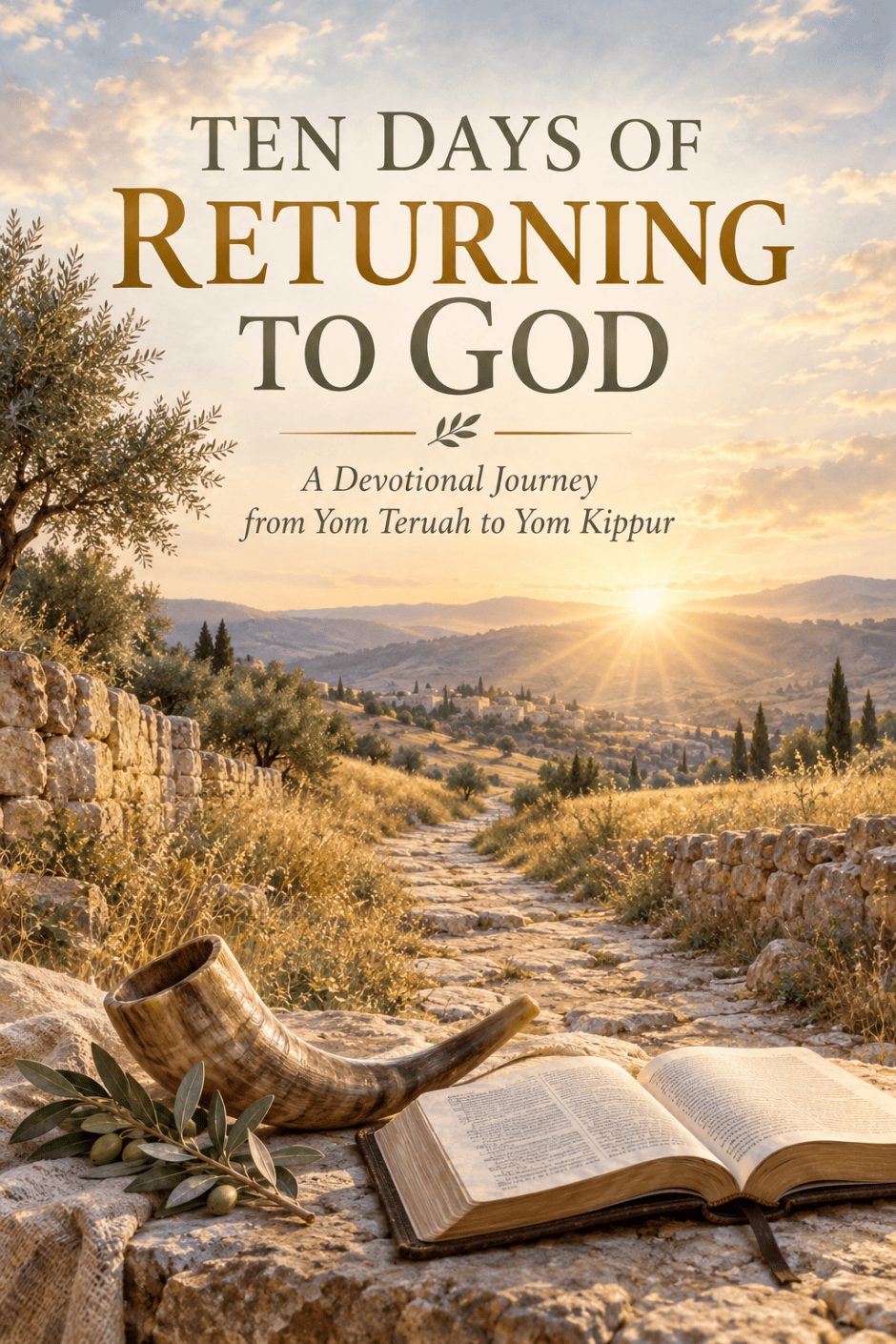
The period from Yom Teruah to Yom Kippur offers a beautiful opportunity for this kind of quiet reflection. This devotional can be done by anyone at any time though!
Yom Teruah, sometimes called the Feast of Trumpets, begins with the biblical image of a trumpet blast. In Scripture, the sound of a trumpet could announce a gathering, warn of danger, prepare people for action, or call God’s people to attention. It was a sound that could not easily be ignored.
Yom Kippur, the Day of Atonement, comes ten days later. It is a solemn day associated with repentance, cleansing, and restoration before God.
Together, these days form a meaningful journey: awakening, examining, returning, confessing, forgiving, and resting in God’s mercy.
“Draw near to God, and he will draw near to you.” —James 4:8
Hey friends! Grab a warm drink, pull up a chair, and let’s chat for a minute. As the summer heat starts to break and that first bit of autumn wind rolls in, my mind automatically goes to the shifting seasons—not just outside, but on God’s calendar.
If you’ve been following along with us lately, you know our family has been deep in the trenches of organizing our home, making monthly devotionals, and streamlining our everyday routines. Today, I am so excited to finally open up our folders and share something close to my heart: our brand-new Christian Fall Feast Unit Studies!
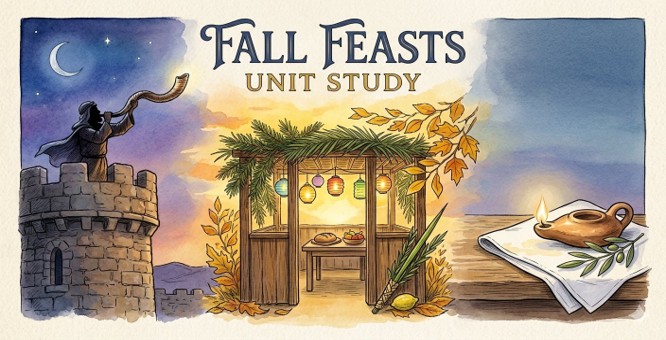
This open-and-go packet covers Yom Teruah (Feast of Trumpets), Yom Kippur (Day of Atonement), and Sukkot (Feast of Tabernacles). It traces the amazing Old Testament history straight through to how it all beautifully points to Jesus.
First, I want to apologize as I normally try to have the new devotional finished at least a couple of days before the next month begins… we’ve had a lot on our plates here lately, but I finally finished it! I have not completed the other devotional videos that I have been working on though… but GOD is working in that situation and we have witnessed HIS hand in so many areas this past month that it has been AMAZING!
Every morning, our families make a conscious choice about what to wear. We check the weather, look at our schedules, and pull garments from the closet to get ready for the day. But as Christian parents and teachers, how often do we pause with our children to intentionally choose our spiritual wardrobe before the schoolbooks open or the busy day begins?
In a loud, fast-paced world that tells us to look out for number one, scripture invites us to bring our families into a beautifully different rhythm. In Colossians 3:12, we are given a divine dress code: “Put on therefore, as the elect of God, holy and beloved, bowels of mercies, kindness, humbleness of mind, meekness, longsuffering.” Godly character isn’t something that just happens; it is an identity we actively choose to put on every single day.
True meekness and godly character are not signs of weakness—they are strength under control. It is the wisdom to give a soft answer when sibling bickering starts, the quiet confidence of knowing who we are in Christ, and the patience to bear with one another’s mistakes.
Over the next 31 days, our families are going to lay down our sharp defenses, our arguments, and our frantic pacing. Through short daily scriptures, family-friendly discussion questions, and simple prayers, we will explore what it looks like to intentionally build a culture of grace right at home. Gather the kids around the table, open your hearts, and let’s begin clothing ourselves in the enduring beauty of Godly character.
We have a FREE activities planner that goes with all of our devotionals, but this one has a few extra activities included in the devotional as well. I have linked some resources below to go along with these optional activities.
Here is the FREE printable, if you’d like to join us:
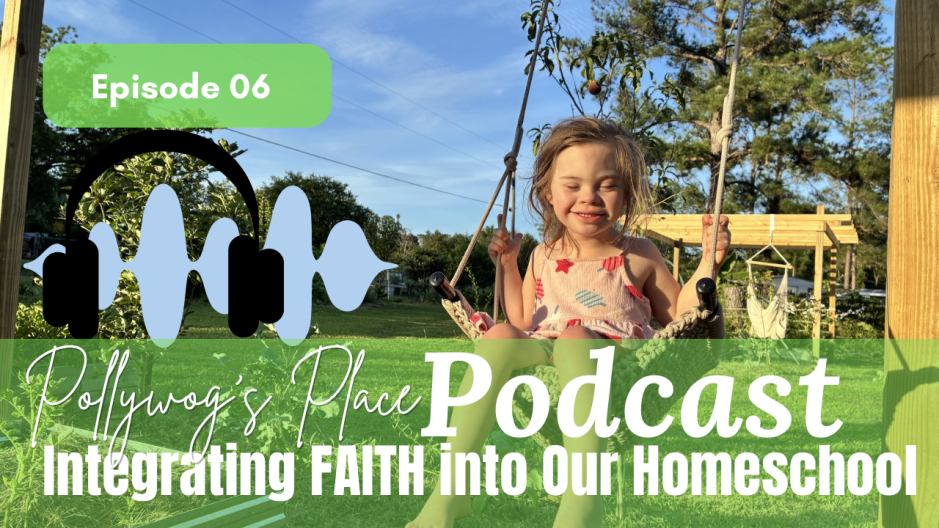
Pip: Welcome back to Pollywog’s Place Blog, where the curriculum planning is done, the Bible verses are cited by chapter and verse, and the school year has a theme for every single month.
Mara: Susie at Pollywog’s Place Blog has mapped out a full year of faith-integrated homeschooling, and today we’re walking through how she’s woven biblical principles into every subject — from financial literacy in January all the way through to December math.
Pip: Let’s start with the plan itself — and it is a plan.
Growing Children of GOD: Weaving Faith Into Every Subject
Mara: The core question here is how you make faith feel like a natural part of learning rather than a separate subject bolted on — and the answer is a month-by-month structure that aligns each academic subject with what the family is already doing that time of year.
Pip: The post puts it directly: “It’s not a race, but there is a big goal ahead… our children’s futures are in our hands, and we must hand them over to GOD and ask HIM to guide us in the way we should go and show us what we should be teaching them.”
Mara: That framing matters because it sets the tone for everything that follows. This isn’t a rigid syllabus — it’s a set of habits the family is trying to build until they become, as the post says, “like second nature.”
Pip: And the structure does a lot of the heavy lifting there. January is financial literacy because the family is already organizing bills and budgets — so biblical stewardship, tithing, and verses on contentment get folded into something they’re doing anyway. The lesson arrives on the back of real life.
Mara: February shifts to fine arts, tied to handmade gifts and sacred art. The post suggests studying hymns, exploring art inspired by Bible stories, and connecting creative gifts to First Peter four-ten — using whatever talent you have to serve others.
Pip: March brings health and physical education, which lands right as things warm up in Florida — and Lent begins. So the body-as-temple conversation and sportsmanship virtues get their moment alongside spring cleaning.
Mara: April opens into creation science and nature journaling, with Earth Day providing a natural hook for environmental stewardship. May uses American Sign Language as the foreign language focus, connecting it to Pentecost and the idea that learning another language is a way to share faith across cultures.
Pip: ASL is genuinely practical — the post notes you can communicate with a family member across a noisy room without making a scene, which is a skill with immediate real-world value.
Mara: June through December keeps the same logic running. Community service in June, home economics and hospitality in July, responsible digital citizenship in August, homesteading and harvest preservation in September. October is language arts built around faith-based literature and Scripture copywork, November is history framed as what the post calls a “Redemptive Narrative,” and December wraps with mathematics — doubling and tripling holiday recipes counts as real math practice.
Pip: Fibonacci sequence as evidence of God’s design in December is the kind of curriculum move that makes a kid actually look at a pinecone differently.
Mara: The post closes by inviting readers to suggest additions — the outline is offered as a starting point, not a finished document, and the family expects to rotate and adjust the topics across future years.
Pip: A living curriculum, which is probably the only kind that survives contact with actual children.
Mara: The throughline across all of this is that faith doesn’t need its own separate hour — it fits inside the subjects that are already there.
Pip: Next time, we’ll see what else is growing at Pollywog’s Place.

 Pollywog's Place Blog