Protected: PROTECTED: Little House On The Prairie Answer Key Links**Although I try to provide as many FREE resources as possible this post may contain affiliate links alt no extra cost to you. We may earn a small commission, if a purchase is made through these links, which helps to support our blog and our family. Thank you!
Mornings:
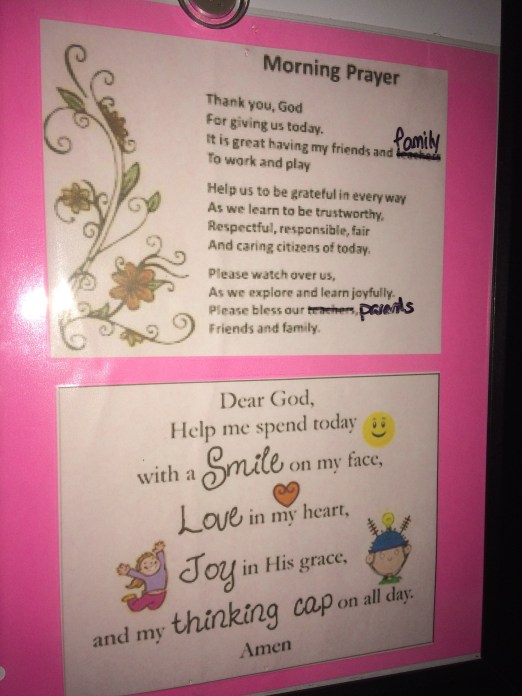
We Start every morning off with our prayers and the Pledge of Allegiance. Below is a picture of the prayers that we say and a video of the Pledge of Allegiance.
Not the prettiest example but that’s what we’ve been using for the past few years.
Don’t have a flag? Grab one HEREand print it out to put up somewhere… you could even let the kids make a flag to proudly display. Amazon also has some little ones like this one HERE and HERE.
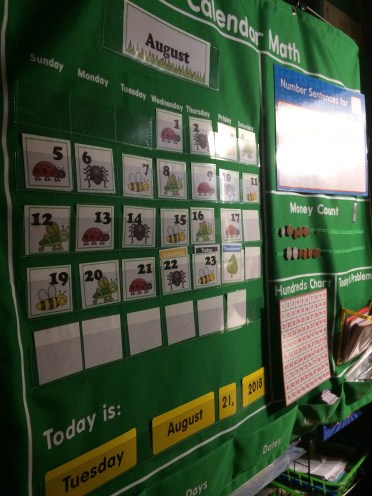
After this we have our calendar time also where we go over such things as the Days of the Week, the months, and some basic math.
This one came from Lakeshore Learning.
We also like to use this song during our ‘Morning Time’ to help the kids learn the 50 States.
Tip: If you want to go to a certain week/chapter or topic simply push the ‘ctrl’ and the ‘F’ button down together and a small bar will pop up. Type in the week number or chapter number you want and it will take you to it.
Week 1: Chapters 1, 2 & 3 (Going West, Crossing the Creek and Camp on the High Prairie
Talk about the importance of routines. We will be talking a lot about routines during this unit. Routines are simply a tool that help us to be more successful in our everyday lives. They are a set of steps that we follow on a regular basis to achieve our goals. Routines help everyone to know what is expected of them and when. This can help wi th frustrations that we face in our daily lives.
Ma kept to her routines even though things were very different. One big difference was the way she had to cook meals. This is a good skill to learn whether you like to camp or in the event of an emergency. Answer the questions below:
What things mentioned were part of their normal routine?
Why do you think Ma kept to these routines?
Watch this video on why routines are so important to kids:
Discuss what you have learned.
What routines help you the most?
What areas do you think you need better routines for?
We like to use the FlyLady app on our phone to keep track of our routines.
2. Ways to help around the house like Laura
We are going to talk about straightening up around the house.
These basic steps can be used in any room of the house.
How to straighten up a room:
First we need to pickup the items that don’t belong in the area/room. ex: Shoes, clothes, toys, etc.
You can use a laundry basket to pick up stray items and to carry them to where they belong.
Pick up all the trash in the area.
Put the trash where it belongs.
Check for spills and other messes.
Clean up messes as you find them.
Pick up piles and stacks of papers or books.
Put everything where it belongs.
Carry dirty dishes to the kitchen
Put them in the sink or other designated place.
Straighten DVDs and bookshelves.
Everything should be facing out so it can be read easily.
Fold blankets and put them where they belong.
Straighten and fluff pillows.
Straighten anything else that is out of place.
Wipe down anything that needs cleaned.
Ask what cleaner should be used.
Sweep or vacuum the floor.
Check the room over before leaving.
Do you know where everything goes? If not, be sure to ask a parent or older sibling to show you where to put everyting.
Watch this quick video and discuss what you learned:
3. Character
We will be focusing on OBEDIENCE this unit. If you don’t have the book we used you can go HERE and download a lesson plan guide to use in your home.
Children, obey your parents in everything, for this pleases the Lord. – Colossians 3:20
We will be studying obedience during this unit. What is obedience?
Obedience means to willfully, promptly, and cheerfully do whatever a person of authority (ex: parents, teachers, or God) asks you to do.
Being obedient. This may not seem like a big deal but there could have been some serious consequences had Laura and Mary not obeyed Ma when crossing the river.
Why do you think it was so important for Laura and Mary to be obedient?
And Jacob… lighted upon a certain place, … and he took the stones of that place, and put them for his pillows, and lay down in that place to sleep. – Genesis 28:10-11
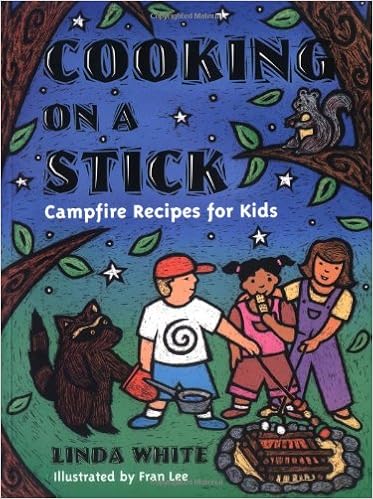
Read a book about camping. Record the Title and Author on your Reading Log.
You may also want to get a notebook to keep track of all the interesting things you will be learning.
Camping can be a very fun experience, if you are prepared.
Learn about Herbs.
And God said, “Behold, I have given you every plant yielding seed that is on the face of all the earth, and every tree with seed in its fruit. You shall have them for food. – Genesis 1:29
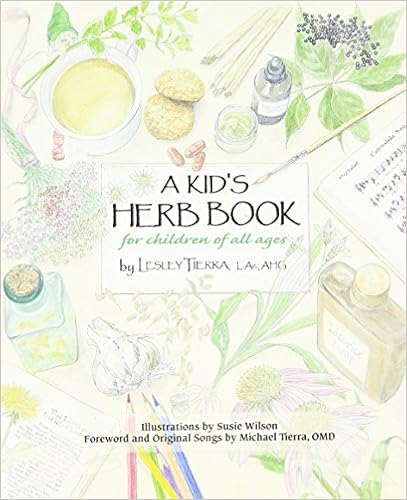
You will need a good book about herbs. Record the Title and Author on your Reading Log.
**This post may contain affiliate links to some of the products and resources that we have used. These are provided at no extra charge to you and help to support our blog and family if a purchase is made through these links. -Thank you!
Here are our Lesson Plans For Life Skills
These lessons were made to go along with ‘The Little House On The Prairie‘ written by Laura Ingalls Wilder. We are planning to go through the whole series and I am keeping track of the different topics we are learning about here on my blog. We hope you enjoy these as much as we have!
This page contains our lesson plans for a few different areas that I have included with our ‘Life Skills’. You will find lessons on cooking, cleaning, and organization as well as bible memory work, manners, and character training. All of these will go together to help raise our children into the responsible and caring citizens of tomorrow.
On weeks where there are several activities listed just choose a couple that interest you the most to work on.
We will be focusing on OBEDIENCE this unit. If you don’t have the book we used you can go HERE and download a lesson plan guide to use in your home.
Tip: If you want to go to a certain week/chapter or subject simply push the ‘ctrl’ and the ‘F’ button down together and a small bar will pop up. Type in the week number or chapter number you want and it will take you to it.
Week 1: Chapters 1, 2 & 3
1. Following Ma’s Example
Talk about the importance of routines. We will be talking a lot about routines during this unit. Routines are simply a tool that help us to be more successful in our everyday lives. They are a set of steps that we follow on a regular basis to achieve our goals. Routines help everyone to know what is expected of them and when. This can help wi th frustrations that we face in our daily lives.
Ma kept to her routines even though things were very different. One big difference was the way she had to cook meals. This is a good skill to learn whether you like to camp or in the event of an emergency. Answer the questions below:
What things mentioned were part of their normal routine?
Why do you think Ma kept to these routines?
Watch this video on why routines are so important to kids:
Discuss what you have learned.
What routines help you the most?
What areas do you think you need better routines for?
We like to use the FlyLady app on our phone to keep track of our routines.
2. Ways to help around the house like Laura
We are going to talk about straightening up around the house.
These basic steps can be used in any room of the house.
How to straighten up a room:
First we need to pickup the items that don’t belong in the area/room. ex: Shoes, clothes, toys, etc.
You can use a laundry basket to pick up stray items and to carry them to where they belong.
Pick up all the trash in the area.
Put the trash where it belongs.
Check for spills and other messes.
Clean up messes as you find them.
Pick up piles and stacks of papers or books.
Put everything where it belongs.
Carry dirty dishes to the kitchen
Put them in the sink or other designated place.
Straighten DVDs and bookshelves.
Everything should be facing out so it can be read easily.
Fold blankets and put them where they belong.
Straighten and fluff pillows.
Straighten anything else that is out of place.
Wipe down anything that needs cleaned.
Ask what cleaner should be used.
Sweep or vacuum the floor.
Check the room over before leaving.
Do you know where everything goes? If not, be sure to ask a parent or older sibling to show you where to put everyting.
Watch this quick video and discuss what you learned:
3. Character
Children, obey your parents in everything, for this pleases the Lord. – Colossians 3:20
We will be studying obedience during this unit. What is obedience?
Obedience means to willfully, promptly, and cheerfully do whatever a person of authority (ex: parents, teachers, or God) asks you to do.
Being obedient. This may not seem like a big deal but there could have been some serious consequences had Laura and Mary not obeyed Ma when crossing the river.
Why do you think it was so important for Laura and Mary to be obedient?
And Jacob… lighted upon a certain place, … and he took the stones of that place, and put them for his pillows, and lay down in that place to sleep. – Genesis 28:10-11
Read a book about camping. Record the Title and Author on your Reading Log.
You may also want to get a notebook to keep track of all the interesting things you will be learning.
Camping can be a very fun experience, if you are prepared.
Learn about Herbs.
And God said, “Behold, I have given you every plant yielding seed that is on the face of all the earth, and every tree with seed in its fruit. You shall have them for food. – Genesis 1:29
You will need a good book about herbs. Record the Title and Author on your Reading Log.
We will be studying out herbs. A person who seriously studies plants and/or herbs for healing is called a herbalist.
Plants are our friends. We need them to survive! Watch this quick video about what plants provide for us:
Discuss what you learned.
Jot down notes in your notebook.
Check out this link HERE for an Herbal Encyclopedia.
Does it surprise you that there are so many herbs?
Bonus points if you find a herbalist in your community.
Week 2: Chapters 4, 5 & 6
1. Following Ma’s Example
Routines are essential for a successful household.
In this section we read about how Ma kept everything running smoothly while they were building the house even when she was hurt. They had a routine for getting moved in and set up as well.
Watch this video to see how one woman moved, built her own cabin, and started her new homesteading life.
Discuss what you’ve learned.
What steps did she go over?
Do you think if others follow her steps that they can homestead too? Why or why not?
What does she say about baby steps?
She seems very happy, would you like to try this?
2. Ways to help around the house like Laura
Emtpying the trashcans.
How to empty a trash can:
Collect all the trash from each room and carry it to the kitchen trash can.
Remove the full trash bag and dispose of it properly.
Clean out the trash can, if needed.
Replace the liner/bag.
Take the empty wastebaskets back to where they belong.
Do you know where the trash cans are in each room? Do you know where the trash bags are kept? If not, ask a parent to show you.
3. Character
Memorize: Children, obey your parents in everything, for this pleases the Lord. – Colossians 3:20
We will be studying obedience during this unit. What is obedience?
Do you remember what obedience means?
Do you remember what your family rules are?
Have you been praying for God’s help?
Watch this video about Genesis 22:1-18
What did God ask Abraham to do?
Did Abraham obey God?
How many times did God have to ask him?
Did Abraham question God?
What did God promise Abraham for his obedience?
We need to pray that God will help us to obey the first time we are told just like Abraham did.
4. Manners
– Read through the next four pages of Emily’s Everyday Manners and discuss the manners shown in the pictures:
Using the magic words:
Please
Thank you
You’re welcome
Excuse me
Use your manners everyday with family, friends, and everyone you meet.
5. Memory Verse
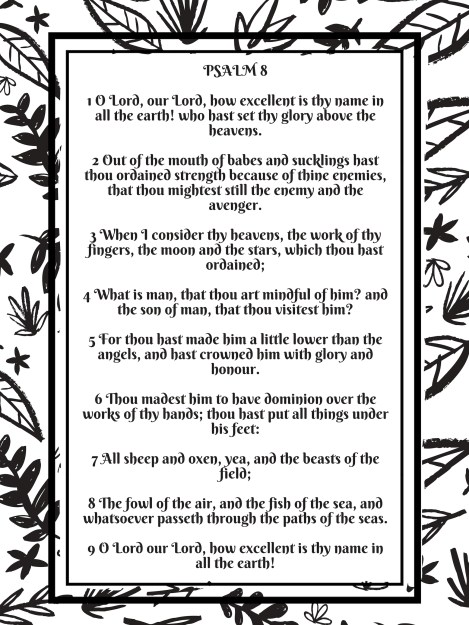
We will be memorizing Psalm 8 during this unit study. Print it HERE.
Work on memorizing a verse during the week for a special prize.
Verse 2: Out of the mouth of babes and sucklings hast thou ordained strength because of thine enemies, that thou mightest still the enemy and the avenger.
Older kids can copy the memory verse down in their notebook.
We have learned that manners are always important. Here is a video about camping etiquette.
Discuss what you learned.
Write down some good camping manners.
Learn about Herbs.
Weeds vs. Herbs
Any plant that has medicinal purposes is called a herb. Weeds are usually any plant growing in a place that we don’t want it to grow.
All herbs could be seen as weeds but not all weeds are herbs. Do you know the difference?
Some herbs are used for medicine. The American Indians learned how to use many plants:
Some herbs are used as spices too:
Discuss what you learned.
Jot down notes in your notebook.
What herbs or spices do you use in your home?
Other Uses
Not all herbs are eaten. There are many ways that herbs can be used. Check out this website HERE for more information.
Write down some of the other ways that herbs can be used.
In our home we use a lot of essential oils. Do you know what essential oils are?
Discuss what you learned.
Jot down notes in your notebook.
Research some herbs that may have been useful in treating Ma’s sprained ankle.
Week 3: Chapters 7, 8 & 9
1. Following Ma’s Example
House Cleaning Routine
Ma kept a neat and tidy home. They may not have had the nicest home, and we know from the story that they had dirt floors for a while, but it was always ‘pleasant’. Do you think that Ma had a cleaning routine? Do you remember her routine from the previous book we read?
Wash on Monday,
Iron on Tuesday,
Mend on Wednesday,
Churn on Thursday,
Clean on Friday,
Bake on Saturday,
Rest on Sunday
This is an example of a routine. Do you have a cleaning routine?
We have a daily, weekly, monthly and yearly routine that we use here. This is something that did take a little bit of work to put together and we are constantly tweaking it to fit our life.
Our daily cleaning routine includes things like making the beds, washing the dishes, cleaning the kitchen, cleaning the bathroom and laundry. We also make sure to sweep the floors, wipe the table and counters as well as to pick up our shoes and put away the toys throughout the day. This helps to keep our house neat and tidy.
We also have routines for things that need to get completed once or twice a week, once a month, and once a year. Our routines help keep everything running smoothly and help us to remember things that need done.
Here’s another video about routines:
What routines do you have set in place to keep your home pleasant?
Who is responsible for what?
What things could you add to your cleaning routine?
FlyLady also has some great ideas to help you set up a cleaning routine that works for you and your family as well as other routines. She also has a ton of great tools on Amazon to help keep your house tidy and organized. We love to pair her tools with natural cleaners from Grove Collaborators.
2. Ways to help around the house like Laura
This week we are going to practice sweeping. Sweeping is probably one of the most frequently performed tasks. It needs to be done before mopping.
How to Sweep a floor:
You need to get your broom and dustpan.
Move things that can be moved like trash cans, rugs, etc. before sweeping.
Start sweeping in one corner and work your way around the room.
Sweep the dirt into piles.
Check the piles for important things like coins and valuables.
Sweep the piles into the dustpan.
Empty the dustpan into the trashcan.
Check the floor again for anything missed.
Put back anything you moved to start with.
Put the broom and dustpan back where you got them from.
Check out this video to see how to properly sweep a floor:
3. Character
Memorize: Children, obey your parents in everything, for this pleases the Lord. – Colossians 3:20
We will be studying obedience during this unit. What is obedience?
Have you been praying for God’s help with being obedient?
How have you done so far?
Have you remembered to thank God for helping you?
Watch these videos about Moses:
What did God ask Moses to do?
Did Moses obey like Abraham? Why or why not?
Did Moses want to obey? Did he obey?
What happened because Moses obeyed God?
We need to pray for obedient hearts that don’t argue back.
Pray for help to obey even when you don’t want to obey.
‘Obedience is not always pleasant, but it is still very necessary. Obedience always brings a blessing.’
4.Manners
– Read through the next four pages of Emily’s Everyday Manners and discuss the manners shown in the pictures:
Some manners get used a lot
Some only get used once or twice
Some are used only on special occasions
5. Memory Verse
We will be memorizing Psalm 8 during this unit study. Print it HERE.
Work on memorizing a verse during the week for a special prize.
Verse 3: When I consider thy heavens, the work of thy fingers, the moon and the stars, which thou hast ordained;
Older kids can copy the memory verse down in their notebook.
6. Fun Activities
See if you can get or borrow a sewing kit. Start practicing the sewing skills listed on pages 6-11 of My Little House Sewing Book.
Write down the benefits and uses of each in your notebook.
Did any of these surprise you? Which ones?
Goldenrod was mentioned in this section. Here is a quick video on its uses:
Discuss what you learned.
Be sure to jot down some notes.
Week 4: Chapters 10, 11 & 12
1. Following Ma’s Example
Throughout this book we have seen that Ma has routines for many areas of her life. The family has morning routines where they get up, get dressed, eat breakfast, and clean up. Each person knows what they need to help with. It is important that each person do what is expected of them to keep things running smoothly.
Our morning routines include getting up, getting dresses, fixing our hair, putting on our glasses if we wear glasses, eating breakfast and brushing our teeth. These and parts of our cleaning routine get completed EVERY morning before we being our schoolwork. When we make sure we get up and get ready for the day we can be prepared for anything that might happen.
Watch this video about some morning routines:
Do you remember the steps in the routine?
Do you have a morning routine?
How does yours compare to this one?
Write down a good morning routine to help you get your day started right.
Here’s a little video for younger kids:
2. Ways to help around the house like Laura
Dust mopping may not be something you do in your home but it can be an easy way to keep your floors looking nice.
How to Dust Mop:
Gather your supplies:
dust mop
spray cleaner
dust pan
broom
Move anything that needs moved to make the process easier and quicker.
Spray the dust mop with cleaner.
Be careful not to spray yourself or anyone else.
Start mopping the floor in one corner and working your way around.
Push any dirt into a pile.
Sweep up the dirt.
Empty the dustpan into the trash can.
Check for missed spots.
Move the items back that you moved before you started.
Take the dust mop outside and shake it out.
Put away your supplies.
3. Character
Memorize: Children, obey your parents in everything, for this pleases the Lord. – Colossians 3:20
We will be studying obedience during this unit. What is obedience?
Have you been obedient? Cheerful? Willing? Prompt?
What areas do you need to work on?
Watch this video about Jesus:
Did Jesus obey God?
Did he do something wrong?
What did he say when his parents wanted him to come back home with them?
Did he talk back to them? (It is important to NEVER talk back even if someone thinks you are doing something wrong but you aren’t. God knows your heart and will take care of the situation.)
What was the reward of Jesus’ obedience? Read Luke 24:52
4.Manners
– Read through the next four pages of Emily’s Everyday Manners and discuss the manners shown in the pictures:
Practice good table manners whether you are at home or eating out
Use the right utensils for food
Make a list of good table manners to use at your home.
Add to your plan as you learn more through this lesson.
Write them down in your book.
What else would you add to these suggestions?
Make a checklist for your trip.
Check out these camping hacks:
Learn about Herbs.
Herbal Lore
Not all herbs are safe to eat. Just like the snakes that the girls encountered some plants are poisonous and some can cause skin irritations. ALWAYS GET PERMISSION BEFORE EATING ANYTHING NEW.
Discuss what you learned.
Jot down notes in your notebook.
Research some herbs that might be useful in treating a sunburn.
Week 5: Chapters 13, 14 & 15
1. Following Ma’s Example
Routines, like manners, can be used anywhere and everywhere even when we go outside.
The family was all sick during this section of the book. Do you think they kept up with their routines while they were sick? They seemed like they were all too sick to care about routines.
What happens when your mom and dad get sick? Does everyone know the daily routine well enough to keep the house running smoothly?
What do you think are some ideas for a good outside routine? Here are some ideas that could be incorporated into your routine:
Put on shoes
Put away shoes, jackets
Put on Bug Spray
Put on Sunscreen
Put on a hat, if needed
Cleaning up inside toys
Ask permission to go outside
Cleaning up outside toys
Put on outerwear, depending on the weather
Washing hands
Can you think of anything else?
Add your own ideas to this list.
Put the tasks in order from what you should start with.
How could this routine have helped keep the family from getting sick?
2. Ways to help around the house like Laura
We are going to learn how to mop. Mopping can be done a couple of ways. Some people prefer to use a mop and bucket of soapy water, others like myself like to use a steam mop, and some people use disposable mops like Swiffers.
However you mop if up to you but you need to make sure it is done properly. Sometimes we need to hand scrub areas of the floor too and we will learn about that next week.
How to Mop:
Floors need to be swept well before mopping.
Move anything that can be moved to make mopping easier.
You need to find your mop and whatever supplies you will need.
For steam mops you usually only need to fill the tank with water.
Ask for a parent’s help.
For Swiffer type mops, you just need the mop and disposable pad.
For mops and buckets you need:
a mop
a bucket filled halfway with hot water and cleaner added to it.
each time you put the mop in the bucket you will need to wring it out well before putting it on the floor.
Begin mopping in one corner of the area and work your way around.
Pay attention to areas that may be extra dirty.
Check to make sure you didn’t miss anything.
When finished you need to pour out the dirty water, if a mop and bucket was used. We usually pour it in the toilet when we use this method.
Rinse out the bucket.
Clean out your mop, throw away any disposable pads, or put the washable pads in the hamper.
Put away your tools.
Replace anything you moved before you started mopping.
3. Character
Memorize: Children, obey your parents in everything, for this pleases the Lord. – Colossians 3:20
We will be studying obedience during this unit. What is obedience?
Bonus points if you make a recipe using Lemon Balm or Lemon Balm Oil.
Discuss what you learned.
Be sure to jot down some notes.
Would this have been useful when the family was sick? Why or why not?
Week 6: Chapters 16, 17 & 18
1. Following Pa’s Example
In this section the family is talking about Thanksgiving and Christmas. Pa went out hunting and found some turkeys. He knew where they would be when the holidays came up so he was thinking ahead and preparing for the holidays in advance.
These events could also benefit from a yearly routine. In our home we keep a Holiday & Party Binder. This helps us prepare for holiday events and party events that we may have coming up.
Every time we host a party we jot down notes and follow the routine we have written down. There are notes telling us how far in advance we need to order things to make sure we get the items we need. This helps to keep everything going smoothly and easily. It also helps us to enjoy the party when the day comes and to spend time with our family and friends while making great memories.
Does your family have a routine for handling holidays?
Make a list of things that you normally do for Thanksgiving or Christmas.
Jot down some things that you would like to do but never have time for.
Work with a parent to decide when and what you need to work on to get prepared for the big day.
Think about things that may need done around the house before the holiday as well like:
Sometimes you may not have a mop or the floor may just need a good cleaning that can only be done by hand scrubbing. This would be using what we might hear as ‘elbow grease’.
How to hand scrub a floor:
Sweep the floor well before hand scrubbing.
Move anything that can be moved to make the job easier.
Gather your supplies:
bucket
hot water
cleaner
scrub sponge or scrub brush
gloves, optional
old towels
Measure the cleaner into the bucket.
Add hot water until half full.
Start in one corner and begin scrubbing in a circular motion, working your way around the room going towards the door.
Rinse out your scrubber as needed.
You may want to use an old towel to wipe up extra water.
Check the floor for any missed spots.
Empty the bucket.
Rinse the bucket and scrubbers.
Put away your supplies.
When the floor is dry you can put back any items you moved before you started.
3. Character
Memorize: Children, obey your parents in everything, for this pleases the Lord. – Colossians 3:20
We will be studying obedience during this unit. What is obedience?
Watch this video to learn about Philippians 2:5-11.
What do you think this scripture means?
If Jesus humbled himself we should too. verse 7
Verse 8 says he humbled himself and became obedient. It is humbling to be obedient but Jesus wants us to be humble.
Do you know what the opposite of humble is? Pride
How was Jesus rewarded for his obedience? He was exalted and honored.
Ask God to help you be obedient and humble like Jesus was.
What would happen if someone did the steps out of order or forgot a step?
2. Ways to help around the house like Laura
Dusting is a necessary chore as dust can build up quickly around the house. I always loved it when my Mom-mom let me help dust. I was always so very careful with all of the knick knacks she had because I didn’t want to break anything.
Below we will also learn about wiping up smudges which can be done at the same time as dusting.
Smudges happen a lot in our home. It seems like no sooner do we clean them up then I see even more here and there. We go through the house about once a week, after we dust, and wipe down the furniture, light switches, and door knobs. This helps to keep everything looking nice and clean.
Research some herbs that the Indians may have used in their cooking.
Week 8: Chapters 22, 23 & 24
1. Following Ma’s Example
During this section we read about how the family’s bed time routine got disrupted. This affected everyone in many ways. Can remember a few things Laura mentioned? What happened to Pa at the table?
Bedtime routines are important for everyone so they can get enough rest. When you are well rested it can help you have a more productive day.
Watch this video on Bedtime Routines:
These kids are young but they know their routine. Do you have a bedtime routine?
What are the steps in their routine?
What are the steps in your routine?
Look at the chart below and find your recommended bedtime:
What is your suggested bedtime?
What time do you normally go to bed?
What time do you normally wake up?
What changes should you make in your bedtime to make sure you are getting enough sleep?
2. Ways to help around the house like Laura
When we sweep and mop we always pick up any throw rugs that we have on the floor. One child is usually responsible for picking them up, taking then outside, and shaking them out. We will usually leave them hanging on the porch railing for a bit to air out as well.
How to shake out a rug:
Carefully roll up the rugs that need to be shaken out.
Take the rugs outside
Shake them well and either hang them over the rail or lay them somewhere safe for a moment.
Sweep the floor and mop, if needed.
Bring the rugs back in and put in place.
This is a pretty simple task to do just make sure that you don’t get any dirt in your eyes, or anyone else’s, when you are shaking the rugs.
3. Character
Memorize: Children, obey your parents in everything, for this pleases the Lord. – Colossians 3:20
We will be studying obedience during this unit. What is obedience?
The 5th commandment tells us to Honor Thy Father and Mother:
Why is this commandment so important?
Remember to pray for God’s help in being obedient.
Check out this post HERE for a great handmade gift idea!
Week 9: Chapters 25 & 26
1. Following Ma’s Example
Make a sample routine
Do you have trouble getting things done on time? Why not make a routine to help with your problems?
Use the questions below to help you get started.
What do you need a routine for?
What do you need to get completed?
When do you need to do this?
How often do you need to do these tasks?
Is there anything else you can think of that would help you be prepared?
Show your sample routine to a parent.
Bonus points if you can start using your routine consistently.
Watch this video for some sample routines for kids:
Sometimes keeping our routines visible can help us to remember what we need to do and help us to be more responsible. Watch this video below for an example that you might want to try in your home:
2. Ways to help around the house like Laura
Vacuuming is something we don’t do a lot of and I’m sure that Laura and her family didn’t either. However in order to keep our homes nice and neat we do need to know how to vacuum properly.
When we do vacuum we only move the large furniture once or twice a year to get behind it. Other than that we just clean around and under everything as we go.
How to Vacuum:
Get the vacuum.
Check to see if the bag/canister needs replaced/cleaned
Straighten the room like we learned in Week 1
Plug in the vacuum
Turn on the vacuum
Begin to vacuum in one corner and work your way around the room.
Work the vacuum back and forth, slow and steady.
Move small items as needed
Check the room for any missed spots.
Turn off the vacuum.
Unplug the vacuum.
Wind up the cord
Check to see if the bag/canister needs replaced/cleaned
Put the vacuum back in its place.
Some vacuums have special attachments for furniture and such. You may need to ask your mom or dad to show you how to use these attachments so you can help clean the couches and other items in your home.
There are also smaller hand held vacuums that can be used to clean up smaller messes. These can also be very handy when cleaning out a vehicle. If you have one of these ask your mom or dad to show you how to work it. Just remember that a vacuum is not a toy!
3. Character
Memorize: Children, obey your parents in everything, for this pleases the Lord. – Colossians 3:20
We will be studying obedience during this unit. What is obedience?
Review what you have learned.
When your parents ask you to do something and how to do it, is it OK to do it a different way as long as you get it done?
Watch the videos below:
Who disobeyed God? How?
Did his disobedience affect others? We never know who we may hurt with our disobedience.
We need to remember to pray to be obedient so that we don’t hurt others.
4. Manners
5. Memory Verse
We will be memorizing Psalm 8 during this unit study. Print it HERE.
Work on memorizing a verse during the week for a special prize.
Verse 9: O Lord our Lord, how excellent is thy name in all the earth!
Older kids can copy the memory verse down in their notebook.
Work on saying everything you have memorized.
6. Fun Activities
Make a Nine Patch pillow using blocks like Laura and Mary were working using the instructions on pages 16-21 of My Little House Sewing Book.
Name your three favorite dishes that have Garlic as an ingredient.
Week 10: Finishing Up
1. Following Ma’s Example
In this unit we have learned why routines are so important. Below are some of the reason:
Routines help us to be more responsible
Routines help us to be more successful
Routines help us to be more productive
Routines help us to be more efficient
They can also help prevent a lot of frustration and stress from not being prepared for things that happen in our lives.
Have you been able to use your routine from last week?
How has it helped you?
What do you need to change?
Keep up the good work and find more ways to use routines to help make your life easier.
2. Ways to help around the house like Laura
One chore that my littler kids love to help with is watering the plants. You need to check with your parents before doing this as some plants don’t need as much water as others do.
Slowly tip the spout of the can into the pot and water as needed.
Don’t over water the plant or it will make a mess.
Look at the plant and remove any dead leaves or foliage.
Rotate the plant a little bit so it can get even sunlight
Move around the room and water each plant that needs watered.
Throw dead leaves in the trash can.
Pour unused water into the sink.
Return the watering can to its place.
3. Character
Memorize: Children, obey your parents in everything, for this pleases the Lord. – Colossians 3:20
We will be studying obedience during this unit. What is obedience?
Watch this video about Jonah:
Can anyone hide from God?
The men on the ship didn’t know that Jonah had been disobedient to God until he told them just as your parents don’t always know right away when you have been disobedient. God always knows.
How did Jonah’s disobedience affect the others?
What happened when Jonah repented?
What did Jonah do when God told him what to do the next time?
We need to pray for grace to be obedient.
4. Manners
Watch this video about manners:
5. Memory Verse
We should have memorized Psalm 8 during this unit study.
** This post may contain affiliate links to products that we use in our home. These links help to support our family and our blog.
You may be wondering what butter making, bear hunts, and bull dogs have in common, right? Well, these were just a few of the topics we covered in our first week of our Little House On The Prairie Academic Adventure.
We have had so much fun as I’m sure you’ll see in the pictures below. I’ve been meaning to post our progress but we’ve been so busy there hasn’t been a lot of time for another ‘b’ topic… blogging! I’m gonna try to catch up a little tonight before I go to bed and put away my computer for our Screen Free Sunday which is another post in itself.
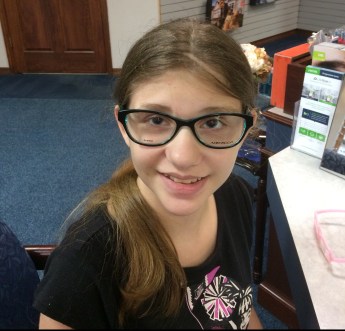
Caitlyn’s new glasses.
The first week we were quite busy with school, doctor appointments, and square dancing not to mention everything else that LIFE seems to throw at us. We read through the first two chapters of Little House in the Big Woods and discussed what we read. The girls also worked on some Vocabulary matching and crosswords that I made up.
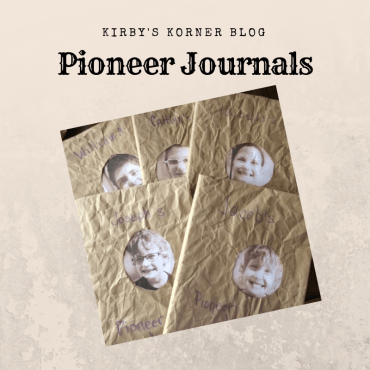
We’ve been working through the topics I have listed in the weekly guide and the kids have been so excited to learn so many things about Laura Ingalls Wilder and her pioneer family. Our Pioneer Journals were one of our first projects and the kids loved making them. They will be using these for various writing assignments throughout the year.
**Although I try to provide as many FREE resources as possible this post may contain affiliate links alt no extra cost to you. We may earn a small commission, if a purchase is made through these links, which helps to support our blog and our family. Thank you!
NOTE: My kiddos were 5, 6, 9, 11, and 15 at the time we created study unit. Some ideas may need to be changed/adjusted for older kids.
Tip: If you want to go to a certain week/chapter or topic simply push the ‘ctrl’ and the ‘F’ button down together and a small bar will pop up. Type in the week number or chapter number you want and it will take you to it.
Introduction:
We have been using the Little House on the Prairie Books for our homeschool this year and my kids are loving it. I have scoured the internet for resources to make our learning experience as fun and exciting as possible. This series of posts is a compilation of different resources we have found and used in our home. Please note that some of these may have been FREE at the time I found them and prices and/or availability may have changed. Feel free to leave your own links in the comments section below.
I also want to take a moment to thank all of these wonderful people who put together so many wonderful resources for all of us to use with our children. I know that many hours, blood, sweat, and tears went into these projects but your work is greatly appreciated!
We will be completing this Lap Book project as we read through this book.
Reading:
We will be reading the noted selection for the week as well as discussing what we have read. I may come up with other questions as well. Kids are curious and I know we will have many questions which may lead to some research in other areas.
We will also be working on reading through a few books, see Kirby’s Kids Grade by Grade Homeschool Reading List , for each different grade level. The older kids will have some independent reading while the younger ones will have a mixture of read alouds, read alongs, and independent reading.
You should keep a record of the books read. You can do this in a notebook or using this printable HERE.
Handwriting:
I did not list handwriting in the weekly work tasks as my kids are using the Spencerian Penmanship for handwriting and will practice this every day.
My kids are loving these new pencil grips we got recently!
Vocabulary:
We will be doing various activities for this area. We will be looking up definitions, matching words, putting the words in alphabetical order, and a variety of other activities.
Writing:
There will be a variety of creative writing ideas as well. I have tried to vary them and offer choices to help encourage writing. We will also be doing various writing assignments in some of other areas as well.
These are just some of the other activities that I am incorporating into the lessons with my kiddos as we are all at different learning levels. I put these in here to keep me organized so I don’t ‘forget’ something.
I will add links to worksheets I find or make as we go through the unit. For a general guideline of skills your child should know by grade level click HERE.
I have pulled a lot of the material from the book for the worksheets listed down below.
Many of the ideas have been pulled from the following resources:
We use Ray’s Arithmetic Books for Lessons (Newer versions available here.) but you can also find free lessons online or simply buy a workbook from your local dollar store.
Note about Ray’s Arithmetic Books: These can be a little confusing at first but the Parent/Teacher guide is so useful! I have found that the books are in order as follows:
1st/2nd grades: Ray’s New Primary Arithmetic
3rd/4th grades: Ray’s New Intellectual Math
5th/6th grades: Ray’s Practical Arithmetic
7th/8th grades: Ray’s Higher Arithmetic
I have used a lot of the examples from the book to create the worksheets you will find listed below. **ANSWER KEY password: momsrock (highlight blank area)
You can also find FREE Lessons with these links:
You can find FREE math lessons at Easy Peasy All-In-One Homeschool and we have used this for a few years and will probably go back to it at some point.
Many of the ideas have been pulled from the following resources:
Which Way Usa Magazines by Highlights (This link is for the whole subscription set but I have provided links on each week for puzzle books that go with the lesson.)
We will also be studying different lessons from Mystery Science which is a site that the kids LOVE! We have found a lot of FREE lessons on this site. (You do need a membership to access all of the site.)
YouTube can be a great resource for educational videos.
We did use the Food & Nutrition Theme Box from Lakeshore Learning for a lot of our food/nutrition lessons. It has some great lesson ideas to incorporate into other areas as well.
We often have some ‘Free Play’ outside whenever the weather allows as well.
Life Skills:
This area contains our lesson plans for a few different areas that I have included with our ‘Life Skills’. You will find lessons on cooking, cleaning, and organization as well as bible memory work and character training. All of these will go together to help raise our children into the responsible and caring citizens of tomorrow.
You can find a FREE printable log for keeping track of memory work here:
Remember: These are the lessons and activities that we used while doing this study but you can do anything your heart desires to make this a great adventure for you and your kids!
**This post may contain affiliate links to some of the products and resources that we have used. These are provided at no extra charge to you and help to support our blog and family if a purchase is made through these links. -Thank you!
Here are our Lesson Plans For Life Skills
This page contains our lesson plans for a few different areas that I have included with our ‘Life Skills’. You will find lessons on cooking, cleaning, and organization as well as bible memory work and character training. All of these will go together to help raise our children into the responsible and caring citizens of tomorrow.
On weeks where there are several activities listed just choose a couple that interest you the most to work on.
We will be focusing on OBEDIENCE this unit. If you don’t have the book we used you can go HERE and download a lesson plan guide to use in your home.
Tip: If you want to go to a certain week/chapter or subject simply push the ‘ctrl’ and the ‘F’ button down together and a small bar will pop up. Type in the week number or chapter number you want and it will take you to it.
Laura interrupted Mary in the story. Was this wrong?
Discuss how important it is not to interrupt others and how it might make others feel when we interrupt them. (It can make others feel like you don’t think what they have to say is important or that you feel you are better than they are when you interrupt them.)
Come up with a way for children to let you know that they need to tell you something without interrupting. (They can gently place their hand on your hand or arm and wait until you finish.)
4. Memory Verse
Work on memorizing a verse during the week for a special prize.
He who answers before listening – that is his folly and shame. –– Proverbs 18:13
Older kids can check out this Doodle Page via Verse Doodles.
5. Fun Activities
Plan a meal where you can use cracklings. They can be put into cornbread (or hoe cakes) for flavoring. You could substitute chopped bacon if cracklings are not available.
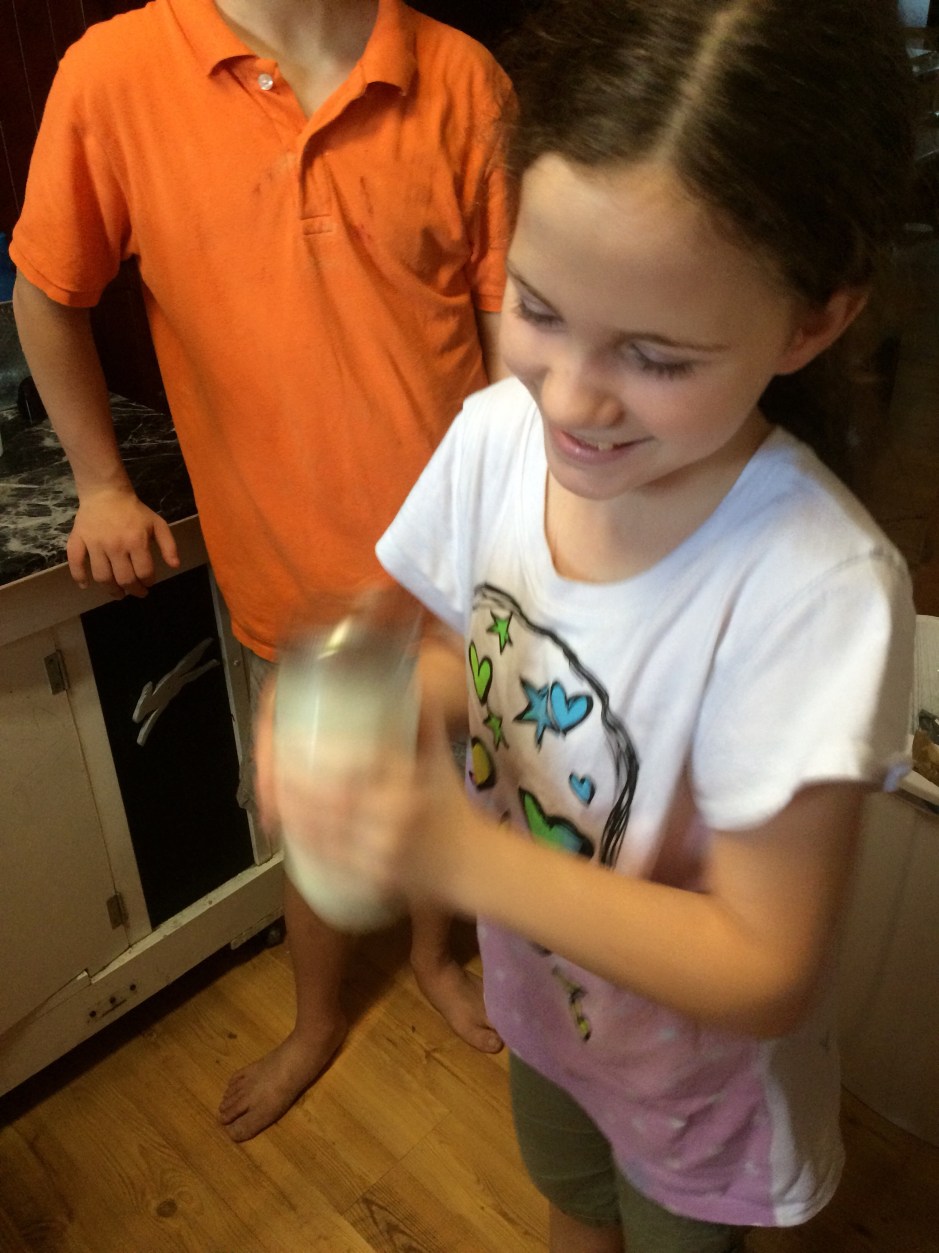
Make butter. Click HERE for a recipe or watch the video below.
Write out the steps for making butter.
How does your butter compare to store bought butter?
See if you can get or borrow a sewing kit. Start practicing the sewing skills listed on pages 6-11 of My Little House Sewing Book.
6. Bonus Skills — Choose one or two to work on
Practice these until you finish this unit study and then we will move on to another new skill.
Memorize the books of the Bible:
Learn about archery which is a skill that has been around for thousands of years.
Now therefore take, I pray thee, thy weapons, thy quiver and thy bow, and go out to the field and take me some venison. — Genesis 27:3
You will need a good book or DVD on archery.
You will also need a properly sized bow and arrows for practice.
Don’t forget a target and a backstop.
Learn the parts of the bow and what they do.
Learn the parts of an arrow and what they do.
Ask an adult to show you how to safely shoot your bow.
Learn the skill of baking homemade nutritious foods from scratch.
…It is written, That man shall not live by bread alone but by every word of God — Luke 4:4
You will need a good cook book.
Start with simple recipes.
Make sure you have all of the ingredients before you start.
Read through the entire recipe before you start.
Ask an adult to show you how to work the oven safely.
Start a recipe collection.
Week 2: Chapters 3 & 4
1. Research Pioneer food preservation.
How do the different food preservation methods keep us from getting sick?
Watch the video:
Discuss what you learned.
Name 3 methods of preserving food that we still use today.
2. Ways to help around the house like Laura
For every beast of the forest is mine, and the cattle upon a thousand hills. I know all the fowls of the mountains: and the wild beasts of the field are mine… for the world is mine, and the fullness thereof. — Psalm 50:10
Taking Care of Your Pets
This video is about taking care of a dog but many of the responsibilities will be the same for other pets.
Practice these until you finish this unit study and then we will move on to another new skill.
Memorize the books of the Bible:
Learn about archery
Learn about baking
Week 4: Chapters 8 & 9
1. Research a Pioneer Laundry Day
Discuss what you learned.
How is this different from the way you wash clothes?
Watch this video about soap making.
Discuss what you learned.
Why did they keep the kids away?
Other:
Springtime was when the gardens are planted. Click HERE to learn more about pioneer gardens.
Here is a fun video about a pioneer dance which may be similar to the one described in Chapter 8.
2. Ways to help around the house like Laura
Sin can pile up in our hearts just like dirty clothes can pile up in our rooms. We need to make to sure to get our hearts washed and our clothes washed on a regular basis.
Use this Sequencing Worksheet to make a chart showing the laundry cycle from sorting, to washing, to drying, to folding and putting away, and clean up.
Check out this video about the benefits of hanging your clothes out on the line:







 Pollywog's Place Blog