
Pip: Welcome back to Pollywog’s Place, where the lessons are ancient, the stakes are surprisingly high, and the protagonists are occasionally amphibians.
Mara: Susie at Pollywog’s Place Blog has a piece up that uses a classic fable to dig into something genuinely consequential — the power words have over the people around us. Let’s start with the tale itself and what it’s actually asking us to do.
The Two Frogs Tale
Pip: The setup here is a question about stakes — specifically, whether the words other people say to us can be the difference between making it out of a hole and not making it out at all.
Mara: The post frames it directly: “We need to see just how powerful our tongue and our words can be. If we speak an encouraging word to others it can possibly be the motivation that they need and help them to get through a difficult time.”
Pip: And the flip side is just as stark. The post doesn’t soften it — wrong words can send someone into a downward spiral. That’s not a metaphor being stretched; the fable literalizes it as a matter of survival.
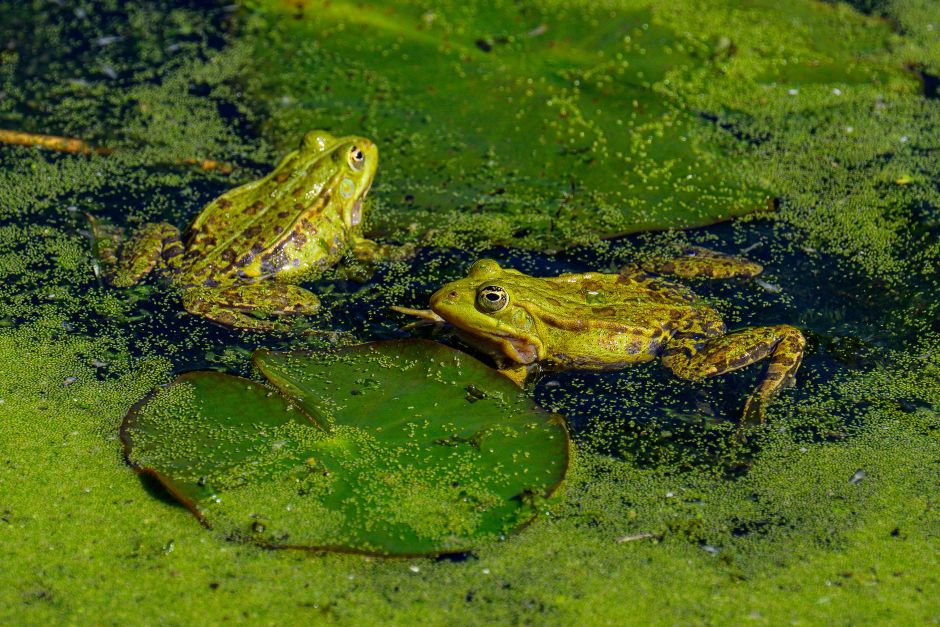
Mara: The fable itself is the engine of the whole piece. Two frogs fall into a deep pit. The crowd tells them they’re as good as dead. One frog believes it and gives up. The other, who is deaf, assumes the crowd is cheering him on — and he jumps harder and gets out.
Pip: So the frog who survives does so precisely because he couldn’t hear the discouragement. Which is either a beautiful lesson or a fairly grim commentary on what the rest of us are subjected to.
Mara: The post draws that out carefully. It connects the fable to a broader idea about being intentional — making a conscious effort to use words that encourage rather than deflate, and asking for help staying quiet when you genuinely can’t manage that.
Pip: There’s something honest about that last part. Not “always say something kind,” but “if you can’t, maybe say nothing.”
Mara: Right — the post names tongue-control as genuinely difficult, almost impossible at times. It’s not presented as easy virtue, which gives the moral some weight.
Pip: The fable earns its place here because it makes the abstract concrete. Words as life-or-death isn’t hyperbole when you watch one frog die and one walk away.
Mara: The throughline is simple but not small — what we say shapes what people believe is possible for them.
Pip: Worth sitting with. More from Pollywog’s Place next time.
 Pollywog's Place Blog