Susie is a slightly crazy, homeschooling, gardening, square dancing Momma with a houseful of babies (10 to be exact), and a whole lot of Jesus. She gave birth to seven of those babies (and she has the stretch marks and scars to prove it) and then God chose her to be Momma to three more who she refers to as her 'Unexpected Blessings'. Having a large family means she has heard just about all of the large family jokes... you know like 'You know how that happens, right', or 'Don't you have a TV?'. Many people believe that she must be related to Mother Teresa but she insists she isn't anywhere close to a Saint although she does appreciate as many prayers as she can get sent her way. Even though four of her babies have flown the coop, her life stays really busy. Most days start out early with a cup of her favorite Dandy Morning Coffee and a quick Trim Healthy Mama breakfast before the kids get up and the crazy starts. She looks at every day as an adventure where the unexpected keeps her on her toes. In the rare moment that she finds a little quiet time, you can usually find her snuggled up with a good book, browsing a thrift store, sewing a new outfit, piddling in the greenhouse or garden, or getting a little 'Pin Happy' with To-Do projects on Pinterest. She is extremely passionate about her family, cooking, being a keeper of the home, gardening, and square dancing. She is also on a mission to help others to make healthier changes in their lives, one family at a time. She strives to live by the Proverbs 31 model but she also acknowledges that she is not perfect and is just a sinner saved by grace. Pollywog’s Place Blog began as a way to share her family's journey with family and friends as they've gone through so many life changes. After getting so many questions about parenting, homeschooling, gardening, and recipe requests she realized that she could really use her blog as a way to help others out there who may be struggling with their roles as a mother, especially the single mothers who may feel like they are all alone on their journey. This blog has become a journal of sorts and a way for her to help inspire and provide encouragement to others. She enjoys looking back over old posts to see how far they have come and to motivate her when times seem tough. On Pollywog’s Place Blog, she talks about their life's journey through the adoption process, how their faith in God got them through some difficult and challenging times, as well as the many ups and downs they have faced with a large family and special needs (ADHD, ODD, and Down's Syndrome to name a few). Susie also shares the products that they use in their home as well as tips and tricks that she uses to keep her family running as smoothly and efficiently as possible with some gardening and video tours sprinkled in. Do you ever feel like your juggling so many things that you can't think straight? She has often felt the same way but has come up with some simple routines and schedules that help everyone to stay on track and I think they just might help you too! Under the 'Keeper of the Home' tab, you can find various tips, tricks, and hints to get your house up and running on autopilot. That's not been such an easy task for them since they downsized to a 600 ft square cabin but somehow they make it work and she loves sharing some of the helpful tips and tricks that they've learned along the way. One question they get a lot is about how they feed this army. It's not always an easy task and trying to eat healthily can get quite expensive so she is always looking for ways to save money and stick to their grocery budget. Under the 'Mama’s Recipe Box' section they have a ton of their favorite recipes like Daddy Can't Wait Casserole, Hoe Cakes (one of the most viewed posts on the blog), freezer cooking, and meal plans along with their family's 'Trim Healthy Mama' plan ideas and successes. If you haven't heard of the 'Trim Healthy Mama' plan you should definitely check it out today! Sometimes eating healthy does mean she spends a little extra on groceries so she finds other areas to cut expenses. One way they have found is with their cleaning supplies and health products. She has always been concerned about the chemicals (Did you know that the average household contains about 62 toxic chemicals?) and toxins that are in many household cleaners so she tries to use more natural and cost effective ways to clean. Susie has been homeschooling for several years now and although she does not consider herself to be an expert but she has found a variety of products and services that have helped to make their homeschooling journey a unique experience. You can find links to these products under the 'Homeschool' tab. Susie and her kids have had a ton of fun reading through the Little House on the Prairie series and she has posted some of the unit studies that they have put together for the different books. The family has been trying to incorporate some of the old fashioned morals and values into their everyday lives. As if juggling kids, home, and a home business weren't enough, the family also enjoys square dancing twice a week or more. Mr. Awesome and his dad happen to be the only father/son caller duo in Florida and are pretty well known in these parts. She also manages a couple of other facebook and blog pages for a couple of the local square dance clubs. The 'Kirby's Korner' tab is where they post links to their square dancing activities which is one of the things they do as a family. Susie loves to dress up in her fancy dance outfits and thinks the fluffier the petticoat the better. She also loves to take selfies of her various square dance outfits and share them with others. Did I mention that she met Mr. Awesome through square dancing? You'll have to poke around the blog to see if you can find that story somewhere. If you just want to find a list of the affiliate/referral programs that the family works with you can click on the 'Affiliate Links' tab. These links help to support their blog, their family, and their homeschooling mission at no extra cost to you. If you like to chuckle about the crazy things kids do or the crazy things they do on a daily basis then you really should follow their blog. They also have accounts on Facebook (@kirbyskabinblog and @susieschemfreezone) as well as on Instagram (@kirbyzkorner and @susieschemfreezone). They have been posting to YouTube as well so be sure to check that out. In July of 2020, amidst the COVID-19 pandemic, Susie and Shane welcomed their youngest daughter, Shyanne, into the family. Shyanne has a dual diagnosis of Down Syndrome and Dandy-Walker Malformation w/hydrocephalus. She has gained many followers and supporters from around the world who have joined together to be prayer warriors for this special little girl. You can read more about her under ‘Sweet Shyanne’.
The days between Yom Teruah and Yom Kippur provide a meaningful opportunity for families to slow down, listen to God, and prepare their hearts together.
Yom Teruah is associated with the sound of trumpets—a call to awaken and pay attention. Yom Kippur, the Day of Atonement, reminds us of our need for forgiveness and points us toward the perfect sacrifice of Jesus.
Ten Days of Returning to God is a simplified children’s devotional designed to help families explore these truths together. Each day includes a short Bible reading, a child-friendly lesson, a discussion question, a simple activity, and a prayer.
Throughout the ten days, children will learn what it means to:
There are seasons when God calls us to keep moving forward, faithfully tending the work He has placed before us. There are also seasons when He calls us to become still—to examine our hearts, mend what has been broken, and return to Him.
Lately God has been calling me to share what I’ve been learning with others. I won’t pretend to be any kind of expert so I do encourage you to do your own research whenever you may have questions or doubts about things. My biggest reason for sharing is that observing the feasts have allowed me to become close to GOD, delve deeper in HIS WORD, and they allow me to remember HIS PROMISES.
The period from Yom Teruah to Yom Kippur offers a beautiful opportunity for this kind of quiet reflection. This devotional can be done by anyone at any time though!
Yom Teruah, sometimes called the Feast of Trumpets, begins with the biblical image of a trumpet blast. In Scripture, the sound of a trumpet could announce a gathering, warn of danger, prepare people for action, or call God’s people to attention. It was a sound that could not easily be ignored.
Yom Kippur, the Day of Atonement, comes ten days later. It is a solemn day associated with repentance, cleansing, and restoration before God.
Together, these days form a meaningful journey: awakening, examining, returning, confessing, forgiving, and resting in God’s mercy.
“Draw near to God, and he will draw near to you.” —James 4:8
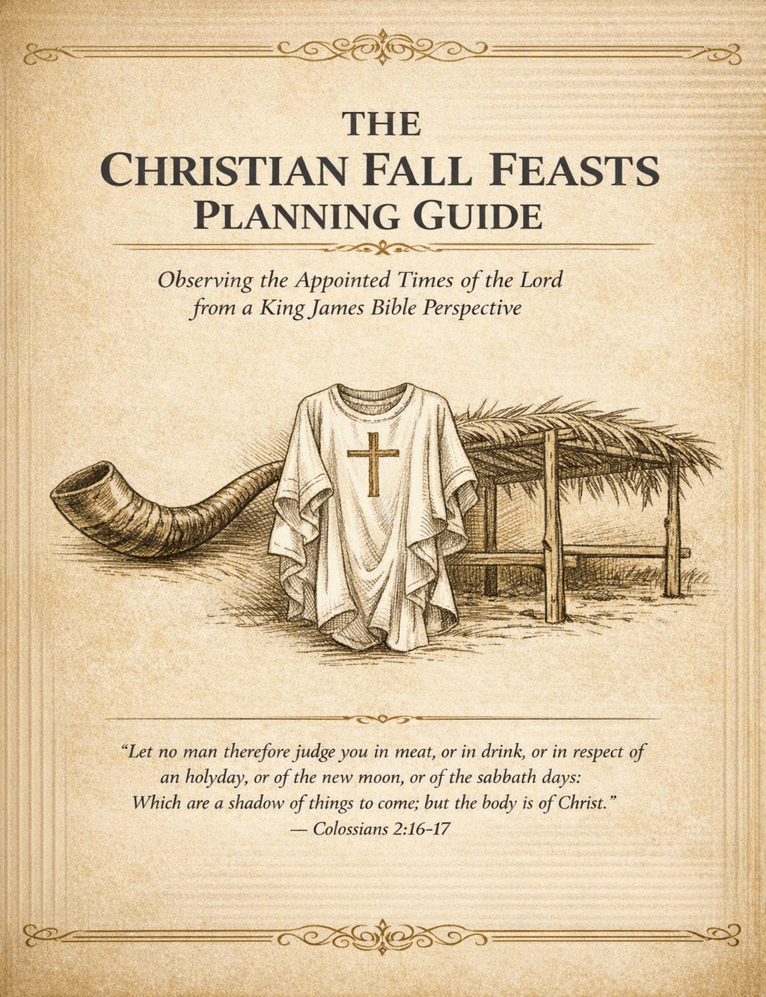
The changing of the seasons always brings a special sense of anticipation, especially as we approach the Autumn months. I am so excited to share something I have been working on close to my heart: the Fall Feast Planning Guides are officially ready for you!
My hope is that these guides bring clarity, peace, and joy to your home as you prepare to celebrate the Appointed Times.
A Quick Heart-to-Heart Before You Begin
Before you dive in, I want to share a quick, transparent note from my heart to yours. I am not perfect in my knowledge of these feasts. Like many of you, I am on a lifelong journey of learning and growing. The information, schedules, and ideas in these guides are simply drawn from the best sources and understandings I currently have available to me.
Because of this, I want to encourage you to do your own research. Let these guides be a helpful jumping-off point, but dive into the scriptures and history for yourself! Additionally, please use your own discretion when choosing which activities to participate in throughout the guide. Every family is unique, and you should always choose what aligns best with your home and your conviction.
Pip: Welcome back to Pollywog’s Place, where the wisdom arrives quietly and tends to hit harder than expected.
Mara: Susie at Pollywog’s Place Blog shared a parable this week about prayer, control, and what it actually means to trust — and there’s more to it than asking for the right weather. Let’s start with two monks and an olive tree.
Two Monks and an Olive Tree
Pip: The setup here is deceptively simple — two monks, two trees, same starting conditions. The real question the story is asking is whether we trust God to know what we need, or whether we’re quietly just asking God to execute our own plan.
Mara: The post draws the contrast plainly. The second monk’s approach was this: “he prayed for God to send what the little tree needed in order to flourish. God created the tree and He alone knows what was best for that little tree.”
Pip: And the first monk’s tree dies. Not from neglect — from over-specification. He prayed for rain, then sun, then frost, each one reasonable on its own, but the sequence was his sequence, not the tree’s.
Mara: That’s the tension the post keeps returning to. It’s not about whether you pray. It’s about what you’re actually asking for when you do. The post puts it directly: “We ask God to send what we think we need when we feel that we need it.”
Pip: Which is, if we’re honest, most prayer most of the time. The first monk wasn’t faithless — he was attentive and devoted. He just couldn’t see the whole tree.
Mara: The post frames this as something genuinely hard to practice. The line is: “I know how hard it is to turn over control but trust me you must surrender every part of your life to Him so that He can have His way and He will bless you more abundantly than you could ever imagine.”
Pip: Surrender every part — that’s not a small ask. But the parable earns it, because the monk who let go ended up with the living tree.
Mara: The post is honest that this is ongoing work, not a lesson already learned. There’s real humility in admitting you’re still learning to pray like the second monk.
Pip: Sometimes the most useful thing a story can do is name the habit you didn’t know you had.
Mara: The parable lands because it isn’t really about trees. It’s about the difference between faith and management.
Pip: Next time — more from Pollywog’s Place, where the quiet ones tend to stay with you.
Hey friends! Grab a warm drink, pull up a chair, and let’s chat for a minute. As the summer heat starts to break and that first bit of autumn wind rolls in, my mind automatically goes to the shifting seasons—not just outside, but on God’s calendar.
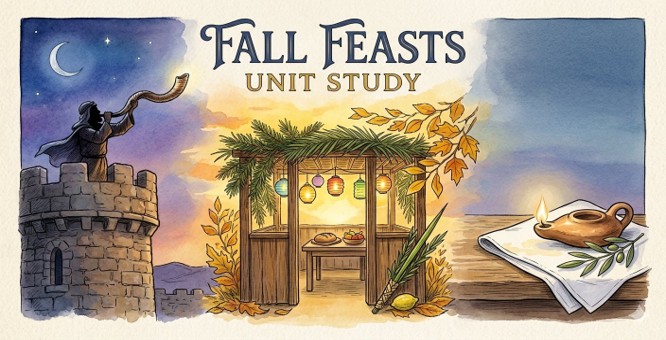
If you’ve been following along with us lately, you know our family has been deep in the trenches of organizing our home, making monthly devotionals, and streamlining our everyday routines. Today, I am so excited to finally open up our folders and share something close to my heart: our brand-new Christian Fall Feast Unit Studies!
This open-and-go packet covers Yom Teruah (Feast of Trumpets), Yom Kippur (Day of Atonement), and Sukkot (Feast of Tabernacles). It traces the amazing Old Testament history straight through to how it all beautifully points to Jesus.

 Pollywog's Place Blog