
Scripture: 1 Peter 5:7
“Casting all your care upon him; for he careth for you.”
Continue reading “DAY 1 — Placing Them in God’s Hands”
Scripture: 1 Peter 5:7
“Casting all your care upon him; for he careth for you.”
Continue reading “DAY 1 — Placing Them in God’s Hands”
Hey there, sweet friends!
If you are anything like me, you are constantly looking for ways to anchor your children’s hearts in truth amidst a world that feels pretty loud and distracting right now. With our days full of homeschooling, household chores, and the beautiful chaos of family life, finding meaningful, open conversations with our preteens and teens can sometimes feel like a challenge.
That is exactly why I am so thrilled to share our latest family project with you: The Heart of Obedience: A 31-Day Family Devotional Journey.
This isn’t just a list of rules or expectations. It is a gentle, 31-day journey designed to guide our older kids into understanding why God calls us to a life of submission and honor. Divided into five weekly themes, each day features a foundational King James Version verse, a thought-provoking discussion question specifically tailored for preteens and teens, a practical way to apply the lesson to daily life, and a short family prayer.
We’ve also included traditional hymn suggestions to weave music into your morning basket, alongside weekly hands-on object lessons (using simple things you already have in your kitchen or living room!) to make these big spiritual concepts visual and unforgettable.
Whether you gather around the living room couch or chat over breakfast, my prayer is that this study brings your family closer to God—and closer to each other.
Want to dive in with us? You can grab your copy of the study guide and print out the daily readings to add straight into your own homeschool binder. Let’s keep growing faith, family, and food together—one beautiful day at a time!
May GOD Bless You!
Continue reading “A Heart of Obedience: A 31-Day Family Devotional Journey”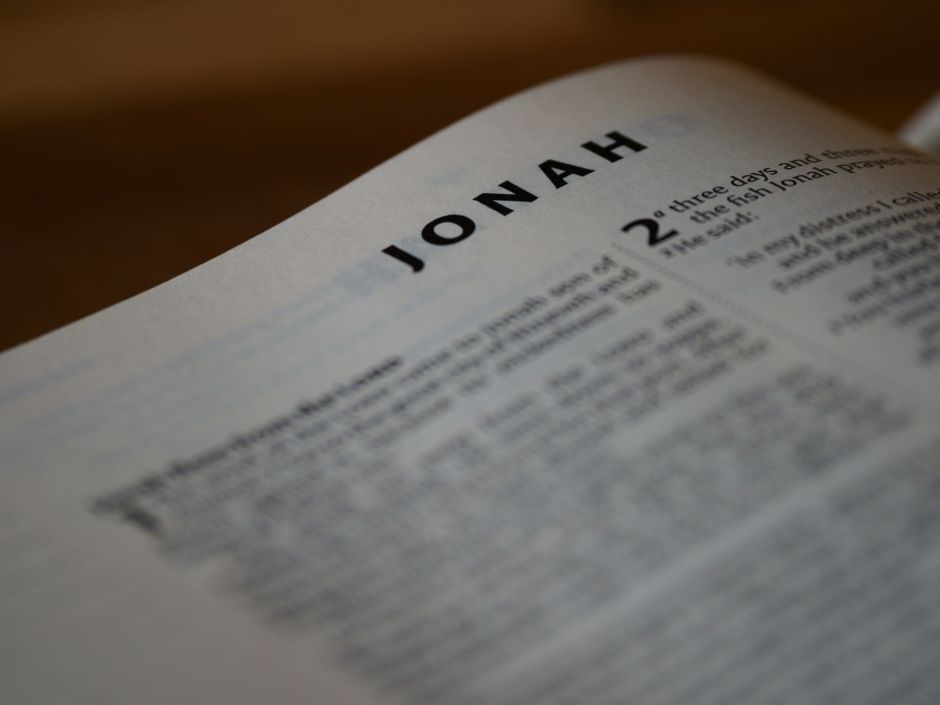
When & Why It Is Read
The entire Book of Jonah is read as the Haftarah portion during the Mincha (afternoon) service of Yom Kippur, right before the final Ne’ilah prayer. This precise timing catches worshippers at a peak moment of physical fatigue and spiritual vulnerability, creating a perfect backdrop for a narrative centered entirely on raw human frailty and immediate divine response.
• The Message of Teshuvah (Repentance): The core lesson of the text is that true change is always accessible and completely shifts destiny. God completely forgives the people of Nineveh the moment they alter their actions, illustrating that sincere inner transformation triggers immediate divine mercy.
• Universal Divine Compassion: Jonah struggles heavily with the reality that God’s grace extends completely beyond Israel to include foreign adversaries, underscoring that all living things are under divine care.
• The Impossibility of Fleeing: Jonah’s failed escape attempt emphasizes that no one can hide from their personal divine purpose or ethical responsibilities.
Continue reading “The Book of Jonah: A Yom Kippur Study Guide”
Hello friends,
There are seasons when God calls us to keep moving forward, faithfully tending the work He has placed before us. There are also seasons when He calls us to become still—to examine our hearts, mend what has been broken, and return to Him.
Lately God has been calling me to share what I’ve been learning with others. I won’t pretend to be any kind of expert so I do encourage you to do your own research whenever you may have questions or doubts about things. My biggest reason for sharing is that observing the feasts have allowed me to become close to GOD, delve deeper in HIS WORD, and they allow me to remember HIS PROMISES.
The period from Yom Teruah to Yom Kippur offers a beautiful opportunity for this kind of quiet reflection. This devotional can be done by anyone at any time though!
Yom Teruah, sometimes called the Feast of Trumpets, begins with the biblical image of a trumpet blast. In Scripture, the sound of a trumpet could announce a gathering, warn of danger, prepare people for action, or call God’s people to attention. It was a sound that could not easily be ignored.
Yom Kippur, the Day of Atonement, comes ten days later. It is a solemn day associated with repentance, cleansing, and restoration before God.
Together, these days form a meaningful journey: awakening, examining, returning, confessing, forgiving, and resting in God’s mercy.
“Draw near to God, and he will draw near to you.”
—James 4:8

Pip: Welcome back to Pollywog’s Place, where the wisdom arrives quietly and tends to hit harder than expected.
Mara: Susie at Pollywog’s Place Blog shared a parable this week about prayer, control, and what it actually means to trust — and there’s more to it than asking for the right weather. Let’s start with two monks and an olive tree.
Pip: The setup here is deceptively simple — two monks, two trees, same starting conditions. The real question the story is asking is whether we trust God to know what we need, or whether we’re quietly just asking God to execute our own plan.
Mara: The post draws the contrast plainly. The second monk’s approach was this: “he prayed for God to send what the little tree needed in order to flourish. God created the tree and He alone knows what was best for that little tree.”
Pip: And the first monk’s tree dies. Not from neglect — from over-specification. He prayed for rain, then sun, then frost, each one reasonable on its own, but the sequence was his sequence, not the tree’s.
Mara: That’s the tension the post keeps returning to. It’s not about whether you pray. It’s about what you’re actually asking for when you do. The post puts it directly: “We ask God to send what we think we need when we feel that we need it.”
Pip: Which is, if we’re honest, most prayer most of the time. The first monk wasn’t faithless — he was attentive and devoted. He just couldn’t see the whole tree.
Mara: The post frames this as something genuinely hard to practice. The line is: “I know how hard it is to turn over control but trust me you must surrender every part of your life to Him so that He can have His way and He will bless you more abundantly than you could ever imagine.”
Pip: Surrender every part — that’s not a small ask. But the parable earns it, because the monk who let go ended up with the living tree.
Mara: The post is honest that this is ongoing work, not a lesson already learned. There’s real humility in admitting you’re still learning to pray like the second monk.
Pip: Sometimes the most useful thing a story can do is name the habit you didn’t know you had.
Mara: The parable lands because it isn’t really about trees. It’s about the difference between faith and management.
Pip: Next time — more from Pollywog’s Place, where the quiet ones tend to stay with you.

